
Guiding writers on how to write their personal experiences
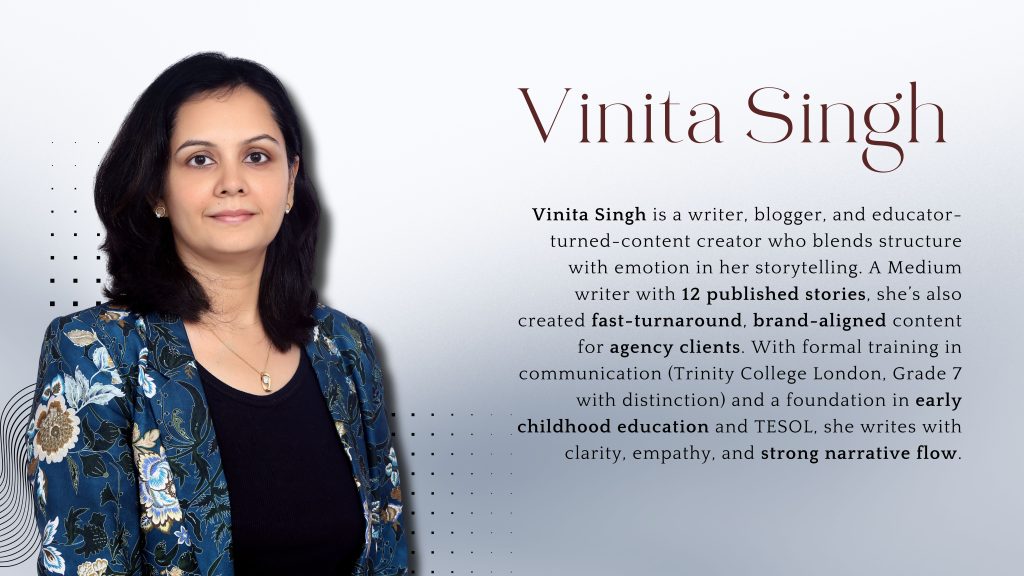
This is a guest post by Vinita Singh
In the writing world, personal experiences carry a unique power. When writers share their own journeys, they don’t just inform readers—they connect with them. I enjoy sharing my life experiences because writing personal stories helps deepen my relationship with readers and loved ones alike. Unlike purely informative pieces, personal stories are rooted in honesty and emotion, creating meaning that lingers long after the final sentence.
Writing about yourself, however, takes intention. A strong personal story is not a diary entry—it is a carefully shaped narrative designed to resonate with others.
How you begin
One of the most important things to remember is how you begin. Avoid opening with your entire backstory. While some background may be necessary, starting too broadly can feel vague or overwhelming. Instead, open with a specific moment: a conversation that changed you, a difficult decision, a failure, or a sudden realization. Concrete details—where you were, what you saw, what you felt—pull readers into the scene and make the experience relatable. A well-chosen moment becomes the emotional doorway into your story.
Identifying your purpose
Equally important is identifying your purpose. Ask yourself why you want to share this experience. What do you want readers to gain or learn? A clear purpose acts as a compass, keeping your story focused. For example, if you’re writing about getting braces at 40, the story isn’t just about orthodontics. It’s about insecurity, courage, self-acceptance, and making bold decisions later in life. By sharing your struggle and transformation, you may inspire someone else to take a leap they’ve been postponing.
The right moments
Not every memory deserves its own story. Finding the right one matters. Look for moments that caused change—a conflict, realization, emotional shift, or decision that altered how you saw yourself or the world. Ask yourself: What stayed with me long after it happened? These moments become your story’s catalyst, the force that drives everything forward.
Honesty is the backbone of personal writing. Authenticity matters more than polish. Write the truth as you experienced it, including doubts, contradictions, and imperfections. You don’t need to appear heroic or wise. Vulnerability builds trust, but oversharing without intention can distract. Share only what serves the story. When you allow readers to see your failures and emotional moments, you invite them into a deeper connection.
Your voice also matters. A natural, conversational tone works better than overly formal prose. When your writing sounds like you, readers feel like they are sitting across from you, listening. This immediacy makes the experience more alive and engaging.
Editing is where personal stories truly take shape
Remove trivia or events that don’t serve the central theme. At the same time, don’t be afraid to rearrange moments or sharpen lines for impact—even if they didn’t happen exactly that way. Avoid repetition and self-justification; readers struggle to connect with explanations that feel defensive. Thoughtful editing keeps the story emotionally rich while remaining clear and readable.
Sensory details are essential. When you describe what you saw, heard, smelled, tasted, or felt, readers don’t just understand the story—they experience it. Sensory details create immediacy and make moments memorable. They transform abstract feelings into lived reality.
Use universal themes
While your experience is personal, the themes should be universal. Explore ideas like growth, fear, belonging, regret, or resilience—elements others recognize in their own lives. This is what makes your story resonate beyond you.
Bonus Tip: Use photographs if you can. Even an old, torn photograph can serve as a powerful memory trigger. Images convey emotion instantly—a tired smile, a cluttered room, a distant gaze. When used thoughtfully, photographs deepen emotional impact and bring your story to life.
I hope these tips inspire you to start writing your personal story soon—and to trust that your experiences are worth sharing.