
What Friendship Movies Really Reveal
Friendship is one of the most overused words in cinema and one of the most under-analysed ideas.
On screen, it often gets reduced to two extremes. Either the “ride or die” montage (matching outfits, inside jokes, loyalty speeches) or the villain version (betrayal, manipulation, jealousy). But most real friendships live in the in-between. They are not always pure. They are not always permanent. They are not even always equal. They are, however, revealing.
So here’s a list of movies that made us ask what is this friendship doing for the people inside it?
Friendship as Foundation: The People Who Build You
Some friendships do not just accompany your life; they author it. They become your reference point for belonging.
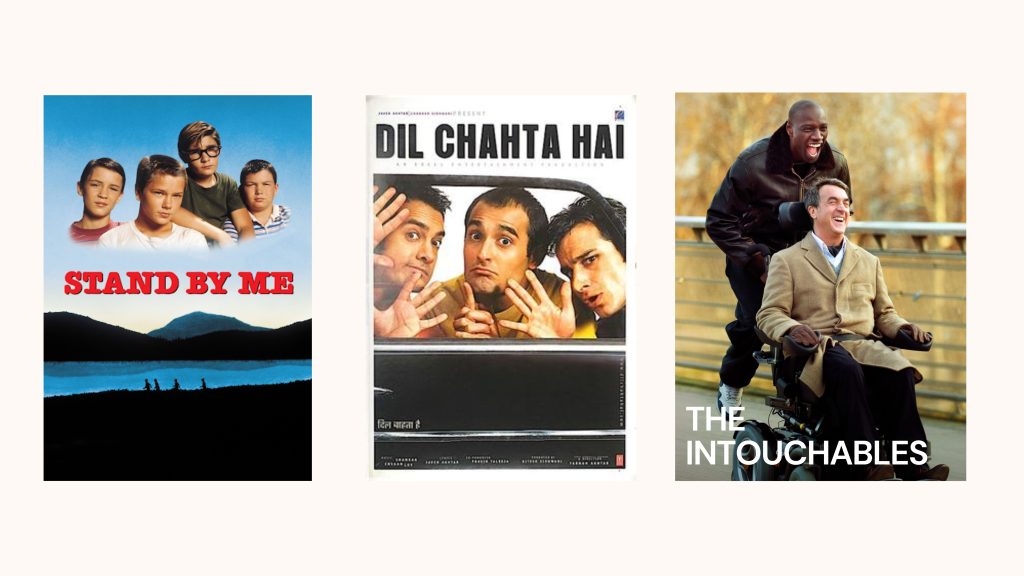
Stand by Me understands childhood friendship as a formative language. The boys are not “best friends” in the shiny way adulthood imagines childhood. They are scared, performative, tender, insecure. Their bond is stitched through shared danger, and that is precisely why it lasts in memory even when it does not last in life. The film is almost blunt about the fact that friendship is not guaranteed to survive time, but it will still shape you.
If Stand by Me is about the first blueprint, Dil Chahta Hai is about the first rupture. Adult friendships come with ego, romantic entanglements, and the inevitable realisation that you do not grow at the same pace. What makes the film enduring is that it refuses to make the drift dramatic. The conflict is not a plot twist. It is adulthood itself. It shows how friendships do not always end, but they can become unrecognisable for a while. And that “for a while” can be years.
Then you have The Intouchables, which sits in a different register. Friendship as a bridge across class, personality, and lived realities. The film’s most interesting move is that it does not pretend equality is automatically possible. The imbalance exists. The question becomes: can friendship still be real when the world has given both people such different starting points? In its best moments, it argues yes, but only when both are allowed to be fully human, not inspirational props for each other.
In this bucket, friendship is a kind of identity infrastructure. It is not always soft, but it is stabilising. It gives you a past you can return to, even when you cannot return to the people themselves.
Friendship as Survival and Rescue: The Bonds That Keep You Alive
There is a specific kind of friendship that is not about fun but rather about staying intact.
The Shawshank Redemption treats friendship as a long, stubborn practice. Not a confession, not a grand gesture. A practice. It is built through repetition, trust, and the rare gift of being seen when the world is designed to erase you. What makes it powerful is not just that the friendship exists, but that it changes what survival means. It turns endurance into a shared project, and hope into something you can borrow from another person when yours runs out.
The Lunchbox runs on the same engine, rescue through recognition. The bond is unexpected, almost accidental, and that is why it feels honest. The film’s friendship is not a shiny reinvention. It is two people finding a small pocket of relief inside routine loneliness. There is no promise of permanence, and yet it matters deeply. Sometimes friendship does not arrive as a person who “gets you.” Sometimes it arrives as someone who simply responds.
And then there is Hachi: A Dog’s Tale, which uses devotion to show a harsher truth. Companionship is not only healing, it can also be devastating. The friendship here is not complicated in the way human friendships are. That is the point. It reminds you that loyalty can be pure, but the cost of purity is grief. If human friendships are messy because people change, this friendship is heartbreaking because it does not.

Friendships often function as informal mental health systems. Not in the “my friends fixed me” way, but in the way that everyday witnessing, routine presence, and low-stakes care can keep someone alive.
Friendship as Modern Loneliness: When Connection Gets Strange
Some of the most revealing friendship stories are the weird ones, because they show what humans do when they cannot access ordinary closeness.
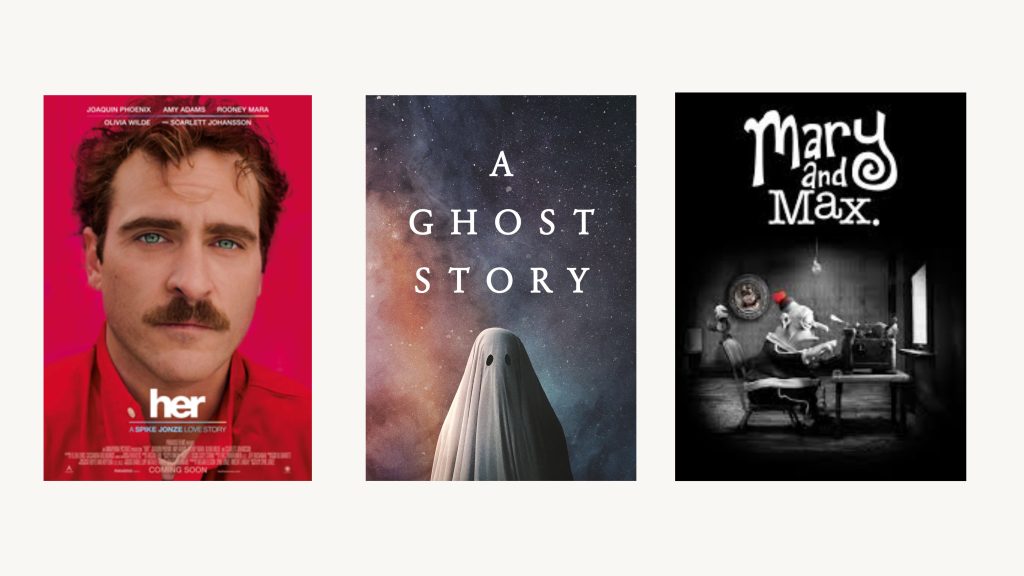
Her is usually framed as a romance, but its sharper insight is about companionship. The film is less interested in scandal and more interested in the emotional architecture of loneliness. Why does this connection feel real? Because it is responsive, attentive, consistent, and safe. In other words, it offers the basic ingredients many human friendships fail to provide. Her argues that in modern life, we often do not just want love. We want to be held in someone’s attention.
A Ghost Story takes that longing and turns it spectral. It is not a “friendship film” in the conventional sense, but it is deeply about connection that refuses to dissolve. The ghost is less a character and more a metaphor, for attachment, for unfinished conversations, for the way a relationship can outlive its participants. In this frame, friendship is not only something you do. It is something that can haunt you.
And Mary and Max is the most disarming example of intimacy without proximity. A pen-pal friendship is a strange thing. Two people become emotionally close without being socially close. No shared circle, no daily contact, no “hanging out.” Just sustained honesty. The film treats this as a legitimate form of friendship, not a lesser substitute. It also shows that distance can sometimes make tenderness easier, because it removes performance.
Modern loneliness pushes connection into new shapes. These films ask if friendship is a human need, what happens when the world makes ordinary friendships harder to maintain?
Friendship as Fracture and Harm: The Friendships That Injure
It is comforting to believe friendship is always good. Cinema is most honest when it disagrees.
Jennifer’s Body is horror, yes, but it understands something very specific about certain female friendships. The mix of admiration and resentment, love and possession. This is not the “women support women” version, nor is it the lazy “girls are mean” stereotype. It is about intensity. When friendship becomes identity, any threat to the bond feels like a threat to the self. That is where jealousy stops being petty and becomes predatory.
Parasite flips the friendship script in a different way. It shows proximity dressed up as friendship, warmth hiding strategy, kindness negotiated like a deal. The discomfort comes from recognition. Many relationships across class are not pure exploitation, but they are rarely innocent either. The film asks what friendship means in an unequal world. Can it exist without performance? Can it exist without transaction? The answer it leans toward is brutal. Class does not just shape opportunity, it shapes intimacy.
And The Banshees of Inisherin gives you the sharpest friendship breakup on screen. The kind with no scandal, no betrayal, no satisfying explanation. One person just stops. That premise hits because it mirrors real life more than we admit. Friendships end without closure all the time. The film treats that ending as an existential event, not a minor inconvenience. It insists that losing a friend can reorganise a life as much as losing a lover.
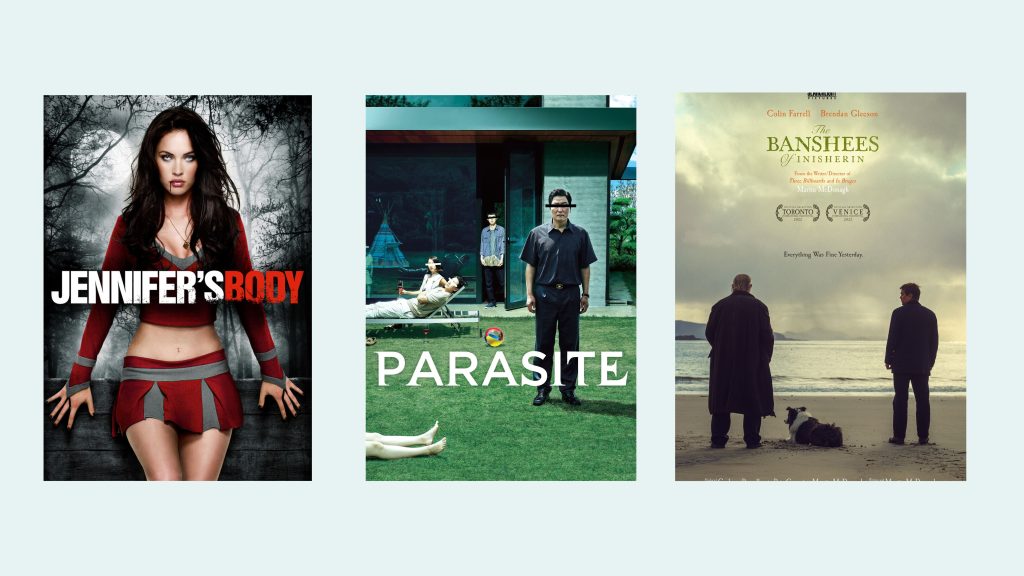
Friendship is not automatically virtuous. It can be nurturing, and it can be damaging. It can be a refuge, and it can be a weapon.
What These Films Collectively Reveal
These movies show the relationships that do not come with scripts. There is no societal template for “how to be a good friend” the way there is for romance or family. So films become case studies. Evidence. Warnings. Comfort.
If love stories ask, “who will choose me,” friendship stories ask something more terrifying… Who will stay, who will change, and what will I become in the presence or absence of them?
If this article put you in a reflective mood, consider registering for the Blogchatter Anthology 2026. Sometimes the best way to understand connection is to write it. Registrations are open until March 5th.