
Slow Travel in India: The Regions That Reward Staying Instead of Rushing
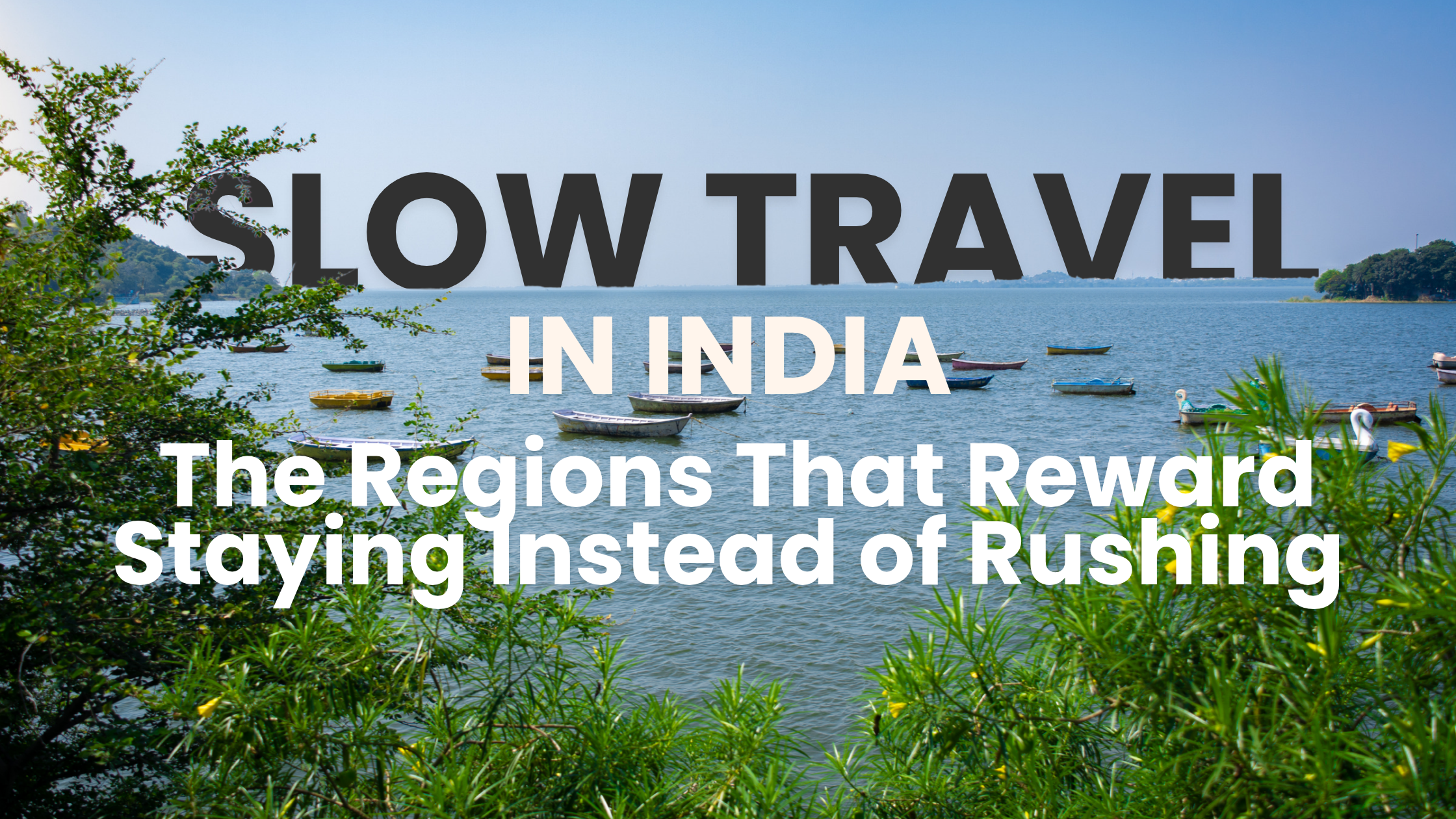
What if your next holiday had fewer places to visit and more time to enjoy them? Here’s where to experience slow travel in India and how to plan a trip without a packed itinerary.
Vacations are supposed to be fun, yet they can also be tiring. There are, however, places where a holiday feels more like a break from everyday life. Places where you don’t keep track of time, follow fancy to-do lists or stop to click pictures every few minutes. Instead, you take in the surroundings, explore at your own pace and enjoy being there.
This could be somewhere in Meghalaya, a laid-back coastal village in Konkan or a quiet town surrounded by tea gardens. You could spend your days exploring a river island, walking through a local market or simply doing very little.
This is slow travel. And it isn’t just a slower version of your usual travel itinerary.
What Actually Counts as Slow Travel?
Slow travel is about how deeply you experience a destination rather than how many places you manage to cover.
For instance, instead of visiting three different states in a single week, you could explore one region over seven to ten days. This gives you time to understand the local culture, be open to changes in your plans, walk through neighbourhood markets, cook with a local family or try regional dishes you may not find elsewhere.
And travellers are showing an interest in experiences that allow them to do exactly this.
According to Skyscanner’s 2026 Travel Trends report, Jorhat, a city in Assam, recorded a 493% year-on-year increase in flight searches by Indian travellers. While this doesn’t necessarily indicate a rise in slow travel, it does show growing interest in destinations beyond the usual tourist hotspots.
Meanwhile, Booking.com’s 2026 travel predictions, based on a survey of more than 29,000 travellers across 33 markets, including India, found that a quarter of global travellers felt that peaceful hobbies such as birdwatching or forest bathing could be reason enough to take a holiday.
The Indian Regions That Reward Staying
Meghalaya: Waterfalls, Villages and Local Life
Meghalaya, often called the Abode of Clouds, offers plenty of opportunities to slow down. There’s Cherrapunji with its waterfalls, the clear waters of the Umngot River near Dawki and villages where you can experience local Khasi traditions.
Mawlynnong, known for its community-led cleanliness practices, is worth exploring for its village life. The region is also known for its living root bridges, which reflect generations of indigenous knowledge.
Give Meghalaya six or seven days if possible. Rushing between its attractions means missing out on much of what makes the region interesting.
Coastal Konkan, Maharashtra: Quiet Beaches and Backwaters
The coastline between Mumbai and Goa has several lesser-explored villages that tourists often overlook.
There’s Velas, known for its Olive Ridley turtle conservation efforts and seasonal hatchling sightings. Further south, Sindhudurg has Bhogave Beach and the Karli backwaters, where you can spend time birdwatching or relaxing by the water.
Vengurla, with its coastal charm, local markets and quiet beaches, is another place worth staying in for a few days.
Instead of planning to cover the entire coastline, pick one or two villages and explore the surrounding areas.
Majuli, Assam: Life on a River Island
Majuli, one of the world’s largest inhabited river islands, lies in the Brahmaputra and is accessible by ferry from the Jorhat side of Assam.
You can stay in a traditional bamboo cottage, hire a bicycle and explore the island’s monasteries, locally called satras. Majuli is also known for its mask-making traditions, which have been preserved by local artisans for generations.
Life here offers plenty of opportunities to experience Assamese culture without rushing from one attraction to another.
November to March is generally a favourable time to visit, although ferry services remain dependent on river and weather conditions.
Ziro Valley, Arunachal Pradesh: Rice Fields and Apatani Traditions
Ziro Valley is known for its beautiful rice fields and the indigenous Apatani community, whose traditional agricultural practices have shaped the region.
Rather than limiting your visit to scenic viewpoints, consider guided village walks and locally organised cultural experiences. These offer an opportunity to understand the region’s farming traditions and everyday life.
A longer stay also gives you time to explore the surrounding villages without trying to fit everything into a single day.
Other Places Worth Exploring Slowly
Coonoor in Tamil Nadu and Jorhat in Assam are ideal for exploring tea-growing regions. Kerala’s backwaters, particularly Kumarakom and Munroe Island, offer opportunities for slower boat rides, village visits and local experiences.
Even destinations such as Jaisalmer and Spiti Valley can be explored this way. The idea is to spend more time in a smaller area instead of squeezing every popular attraction into one trip.
How Do You Actually Plan a Slow Trip in India?
If you want to try slow travel, a few simple changes to your usual holiday planning can help.
Pick one region. Choose a valley, a coastal village or a backwater belt rather than trying to cover an entire state.
Give yourself enough time. Five to seven nights can be a good starting point, while remote Himalayan regions may require longer because of travel distances and road conditions.
Match the season to the destination. Check local weather conditions before making plans. Monsoons, snowfall and seasonal transport restrictions can affect access to certain regions.
Consider local homestays. They can offer opportunities to try regional food, interact with residents and understand everyday life in the area. Choose accommodation that suits your comfort, accessibility and budget.
Plan to do less than you think. Leave some days unscheduled. You might discover an interesting market, spend an afternoon at a café or return to a place you particularly enjoyed.
Disconnect when possible. You don’t have to document every moment of the trip. Sometimes, putting your phone away for a few hours makes it easier to enjoy your surroundings.
What’s the Real Point of Travelling This Way?
India has far too many places, cultures and experiences to fit into a travel bucket list. Yet it’s easy to get caught up in the rush to cover as much as possible, especially when you have limited holidays.
Slow travel offers another way to explore. You might spend an entire morning in a village, discover a local dish you hadn’t heard of or simply enjoy returning to the same spot every evening.
And yes, there may be moments when you feel bored because there’s nothing planned. That’s perfectly fine too.
The next time you plan a holiday, consider staying a little longer in one place. You may come back having visited fewer attractions, but knowing considerably more about where you’ve been.