
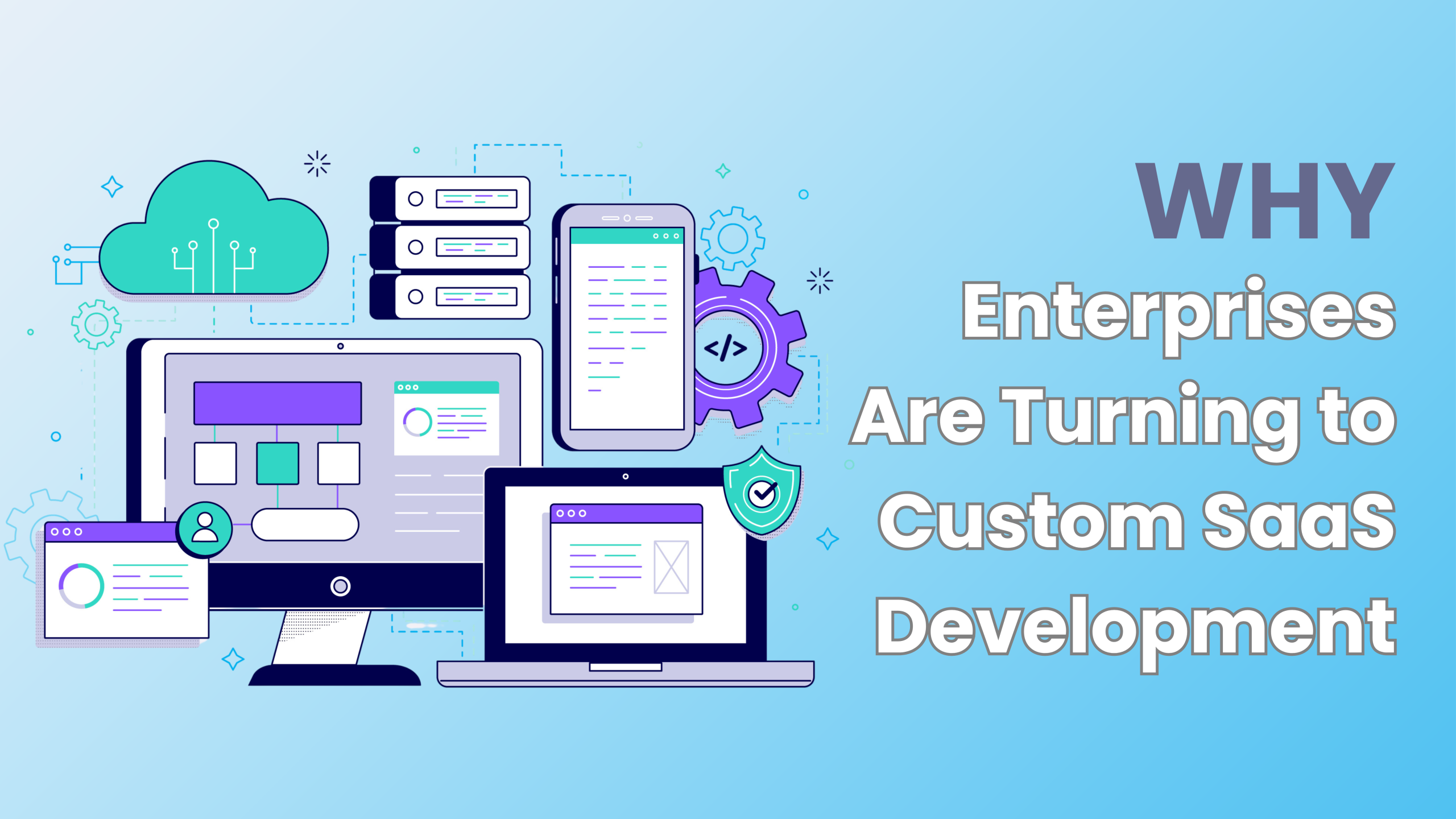
Why Enterprises Are Turning to Custom SaaS Development
Most enterprise software decisions don’t fail because the tool is “bad.” The reason is that the chosen tool was simply never designed for how your business actually works.
If you take a look at most off-the-shelf SaaS platforms, they kind of seem actually perfect. They offer quick setup, the pricing you know in advance, and polished demos. However, the second your organization starts to grow, all those pros are quickly starting to fade. Your team needs to work around the software, but not with it. You may start noticing how processes feel forced, integrations become fragile, and costs are rising.
That’s where they cease to be so perfect. In this regard, more and more enterprises are opting for custom SaaS development. They do it not because they simply have funds, but to get rid of real operational pain.
Generic SaaS works until it doesn’t
Packaged SaaS products are built for scale, but not for specificity. Their role is to satisfy as many firms as possible with just a single product. If your needs are simple, that’s totally fine. But it’ll become a problem if your operations are complex.
In the course of the work of any enterprise, many processes are involved. You’re trying to keep multiple departments, approvals, compliance demands, and legacy systems working together. When the SaaS tool can’t adapt anymore, teams quietly build workarounds to get things done. Numerous spreadsheets appear. Manual steps multiply.
You can always find compromises to explain why you keep using one platform or another. But very soon you’ll see how everything slows down. We’re talking about decision-making, reporting, and even customer delivery.
Custom software matches the needs of your business
What you get with custom SaaS is alignment. That’s its biggest advantage. You don’t need to reshape your workflows just to match the limitations of a tool. You get a chance to build software that reflects how your teams already operate. All of this is happening while consistency and automation improve.
That’s what freedom looks like. You no longer need to be restricted by rigid templates or predefined logic. Only you get to make the final decision. You can always find compromises to explain why you keep using one platform or another.
In short, enterprises choose custom SaaS because it allows them to:
- Design workflows around real internal processes;
- Integrate seamlessly with existing systems;
- Define precise roles, permissions, and access rules;
- Scale functionality based on actual business priorities.
Now you can see what level of control you can get. That’s one of the things you’ll never have with generic platforms.
Security and compliance aren’t afterthoughts anymore
Security must be built into the foundation of every enterprise’s operations. It’s not something you can add later.
With an off-the-shelf tool, you get what everybody else gets. It’s the same security model that can certainly meet general standards, but it’ll never satisfy industry-specific or regional compliance requirements. You’re left adjusting policies around the software instead of the other way around.
With custom SaaS, security is part of the architecture from day one. You define how data is stored, who can access it, how activity is logged, and how compliance is enforced. That’s especially important if you’re handling sensitive data or operating in regulated industries.
Scaling is about the needs of your company
When the number of users increases, SaaS platforms can handle it. That’s what they do well. But when you scale, your strategy and needs change. They grow. You may be launching new services, restructuring teams, or adopting new business models. That’s why you should always ask if the software you use can adapt to these changes quickly. If it can’t, it won’t be an enabler, but a bottleneck for you.
With custom SaaS, you get flexibility without dependency. You don’t need to hope anymore that a feature request will get approval. That’s you who gets to decide what gets built and when.
The cost conversation changes at enterprise scale
When many enterprises see the upfront investment for a custom solution, they start having second thoughts. Sure, you have to pay more. But what you get isn’t short-term savings. You’re getting long-term efficiency.
With subscription-based SaaS, you pay for users, add-ons, and premium integrations. Another thing that you pay for is unused features that you can’t remove. On top of that, you’re paying for inefficiencies. And these often cost more than the software itself.
Another thing that you get with custom SaaS is ownership. Ownership gives you the freedom to tweak, adjust, and evolve a product exactly the way you want. That level of control simply doesn’t exist with one-size-fits-all solutions.
Enterprises typically see value in areas like:
- Eliminating per-user pricing penalties;
- Reducing reliance on multiple third-party tools;
- Lowering operational friction between teams.
The importance of internal adoption
Who’ll be an actual user of the platform? Yes, that’s your employees. Many leaders often overlook internal adoption. If a system feels unnatural or clunky, teams will resist it. They won’t be able to help but use it, but that’ll be another problem that will be slowing everything down.
Custom SaaS platforms are always built with users in mind. Interfaces match real roles. Dashboards show relevant metrics. Processes feel logical instead of imposed. The result – you get faster onboarding, fewer mistakes, and better data quality.
Control is the real competitive advantage
Of all the advantages listed above, control is the defining feature of custom SaaS. It’s simply something no off-the-shelf solution can provide. You get control over data, priorities, and how systems evolve. If you still rely on ready-made SaaS platforms, it means that you’re tying your operations to decisions that you don’t make. On the other hand, custom SaaS puts you in charge.