

What Dharmendra’s heroes teach writers about the relatable protagonist
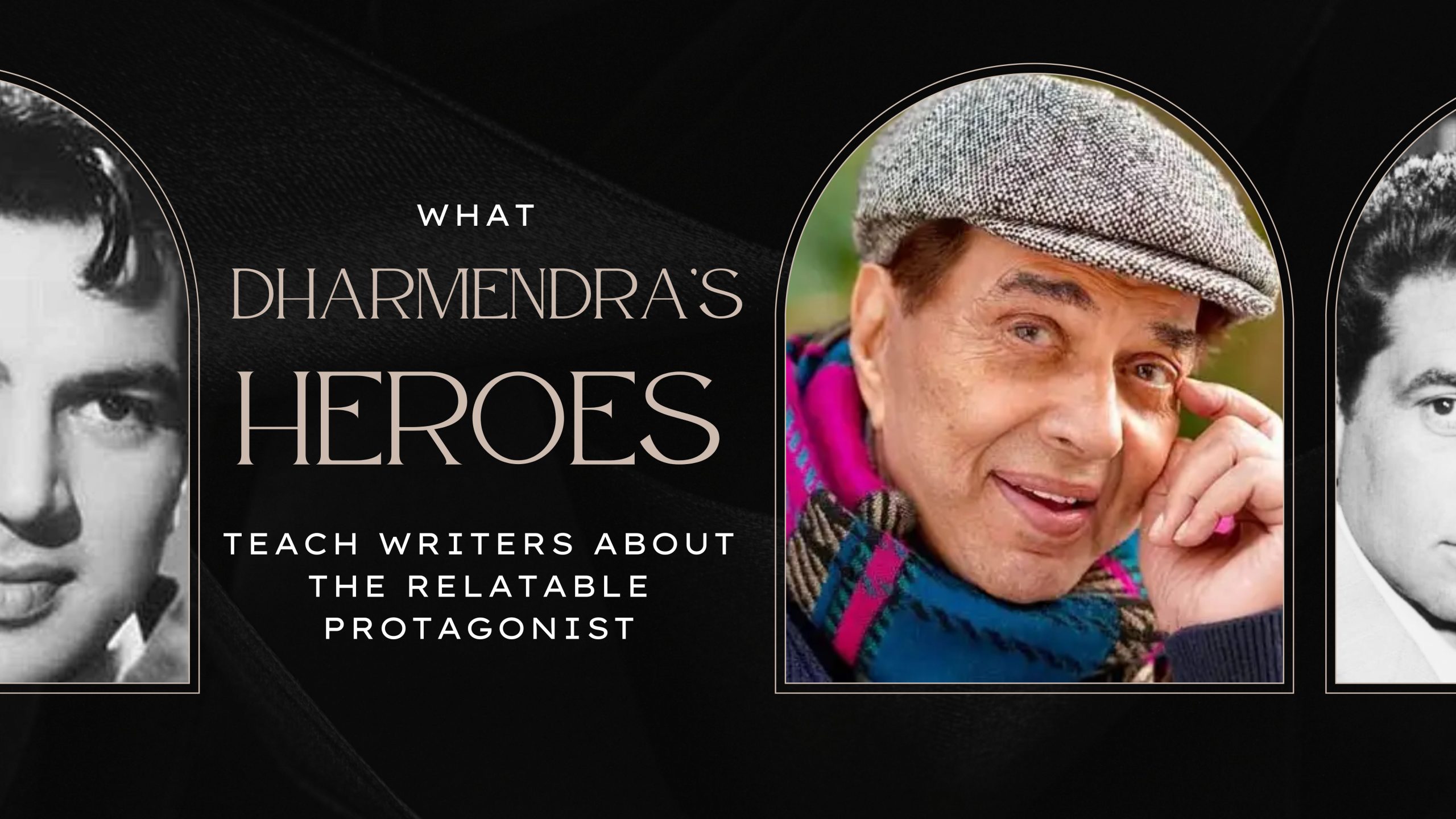
When we talk about Dharmendra, we usually remember the He-Man image and action posters. But if you look closely at some of his roles, what you actually get is some great tips to build a relatable hero.
For us writers, that is the real gold… how do you create protagonists readers see as human first and “heroic” later?
Here are a few lessons from his on-screen characters, translated into writing craft.
1. Start with the person, not the pose
In Anupama and Satyakam, Dharmendra plays gentle, introspective men who are not loud, not flashy, sometimes even socially awkward. These characters work because we meet the person before the label. We see their private doubts, hesitations, moral confusion. Only then do we see them as “heroic”.
Before you think “my main character is brave / witty / badass”, write one scene where they are simply human.
- How do they behave when they are tired and no one is watching?
- What small, slightly embarrassing habit do they have?
- What do they avoid talking about because it makes them feel exposed?
Anchoring your character in small, specific humanity makes their later big moments feel earned, not pasted on.
2. Give your hero a pressure point
Dharmendra’s most memorable roles are all under pressure.
- In Satyakam, he is an idealist engineer forced to face a corrupt system.
- In Chupke Chupke, Parimal is a mischievous professor with a very familiar insecurity: his wife keeps putting her jijaji on a pedestal, and he can’t stand it.
The plot, if you strip away all the noise, is basically watching that one pressure point get poked again and again.
Your hero needs one sensitive nerve the story keeps touching. It could be:
- A value they cannot compromise on
- A secret they are terrified will come out
- A relationship where they always feel “less than”
Once you know this, conflicts begin to suggest themselves. Every scene can either:
- Poke the pressure point, or
- Give temporary relief from it, so the next poke hurts more.
3. Let contradictions live side by side
Dharmendra’s screen image is physically strong, but his characters are often tender, shy or outright goofy. The man who can take on a gang in Mera Gaon Mera Desh is also the same man who becomes a complete clown in Chupke Chupke.
That mix is what makes him feel real. We all know people who are bold in some areas and strangely hesitant in others.
Write at least two traits in tension. For example,
- Fiercely loyal, but conflict avoidant
- Extremely competent at work, but childish in romance
- Physically brave, but terrified of emotional honesty
Then promise yourself you will show both sides on the page. Don’t “fix” the contradiction too quickly. Let it play out in dialogue, choices and mistakes.
4. Use relationships as mirrors
Dharmendra’s heroes are rarely built in isolation.
- In Chupke Chupke, we understand Parimal through Sulekha, through the jijaji, and through his friend Sukumar.
- In Guddi, he appears as himself, a star viewed through the adoring eyes of a fangirl, which completely changes how we see “Dharmendra the hero”.
The people around him are constantly reflecting and challenging his self-image.
Ask: who is my character around different people?
- With their “Sulekha” (intimate equal)
- With their “jijaji” (someone they feel judged by)
- With a friend who knows their worst stories
Write short, low-stakes scenes that exist only to showcase different versions of the same person. You’ll discover new gestures, tones and tells that make them feel less like a concept and more like someone you could meet.
5. Keep the stakes ordinary, let the feelings be big
In many Dharmendra films, the stakes are not “save the world”. Sometimes they are as small as “prove I am not an idiot to my brother-in-law” or “stay true to my principles when it would be easier to compromise.”
But within that ordinary frame, the emotions are huge: pride, shame, romance, gratitude. That is why even a simple prank plot grips us.
You don’t always need apocalyptic stakes. For a character to feel real, it is enough that
- The problem matters deeply to them, even if it looks small from outside
- We understand what they fear losing if things go wrong
Instead of thinking “how do I make this bigger”, try “how do I make the cost more personal”.
A quick exercise
Pick one Dharmendra role you remember clearly and list:
- One flaw
- One value he would never betray
- One relationship that complicates him
- One moment where he is not heroic at all
Now do this same four-point list for your current protagonist. If your list feels vague or empty, that’s your revision map.
Dharmendra passed away on 24 November 2025, at his home in Mumbai, just weeks before his 90th birthday.
For audiences, it feels like the end of a certain era of Hindi cinema. For writers, it is also a reminder of what he modelled so consistently on screen. Heroes who were allowed to be silly, stubborn, shy, proud, deeply loving and sometimes completely wrong.
If you take one thing back from his work, let it be this-
let your characters be people first and “protagonists” later.
Then in a small way, his legacy will keep doing what it has always done best, which is helping stories find their heart.