

Younger leaders, older fears: Why voters want change but also guarantees
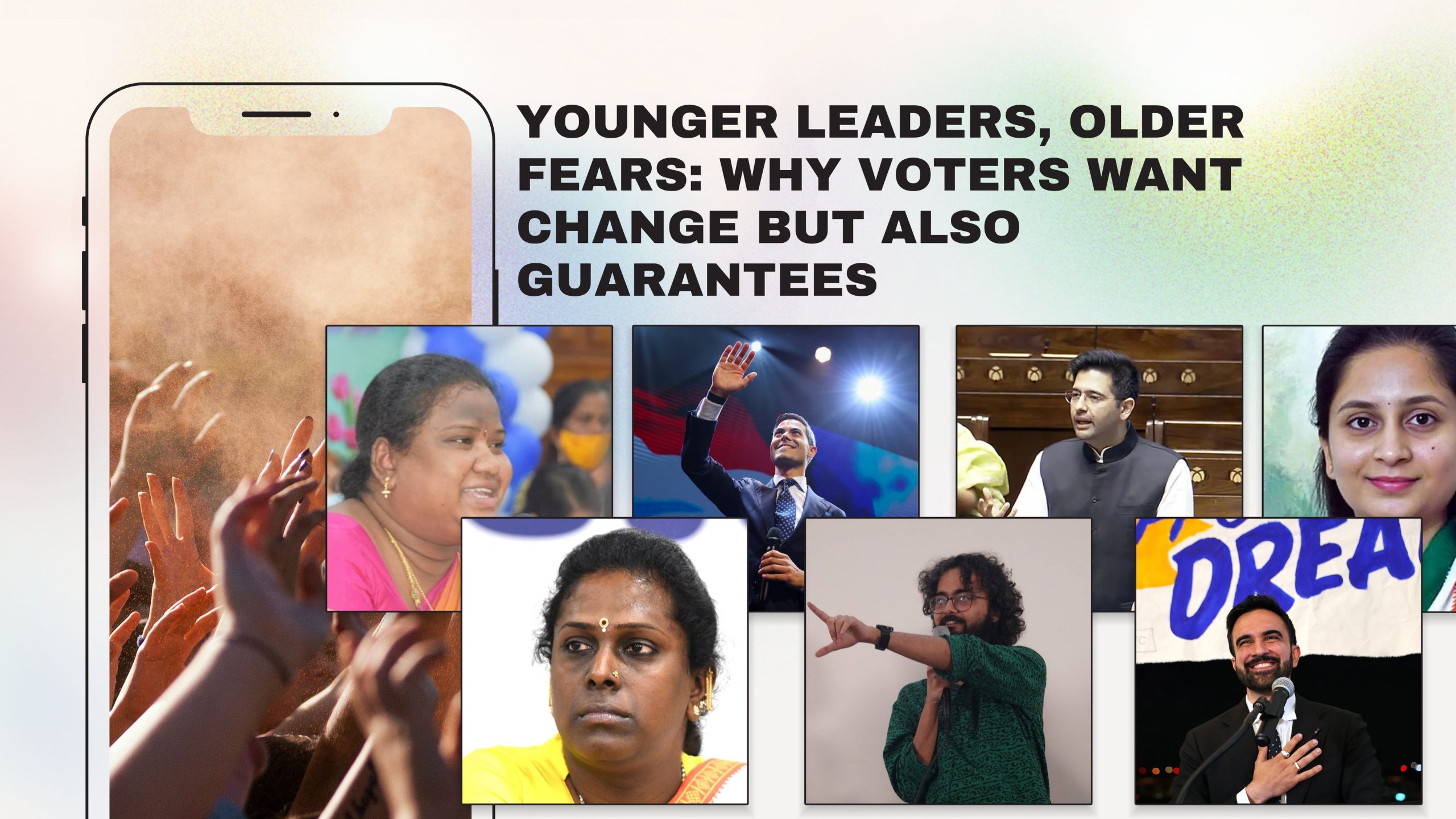
Every once in a while, politics throws up a face that looks nothing like the usual suspects. Someone like Rob Jetten in the Netherlands or Zohran Mamdani in New York: younger, sharper, and visibly out of sync with the traditional leader template.
That contrast led us to a simple sounding question in our WhatsApp group:
If you had to pick, would you trust a younger, untested leader with fresh ideas or an older, experienced leader with a mixed track record?
What followed was an honest glimpse into how people actually think about power.
The emotional pull of “young”
There is clearly a hunger for younger leadership.
A few people answered from the gut.
Fayaz said, “I will trust a younger, untested leader with fresh ideas.”
Tomichan added, “I’d trust a young leader more. I’m an old man.”
That line alone tells you how some older voters feel about their own generation in power.
For others, the tilt toward youth came from disappointment with what “experience” has delivered so far.
Sreeparna pointed out that her experience with seasoned political leaders hasn’t been very good, so why not let young blood and fresh ideas come in and maybe see real change.
Roshni felt that seniors have been running the country for far too long and “seem more keen on looking at the past than at the future,” so fresh new blood in politics feels necessary, not optional.
Underneath all of this is a simple emotion. We want the future to be written by people who will actually live in it.
But then the nervousness kicks in
Once the emotional high settles, anxiety walks in.
Rowshini brought everyone back to earth by asking whether noble ideas are enough if the agency to implement them is missing. How much is practically possible in our system, she argued, has to be a key criterion.
Murugapandian made a similar point through the Indian lens. For him, the real challenge is enforcement.
In a system where laws are weakly implemented and institutions move slowly, choosing only on age feels superficial. Behaviour, track record, and proof of how someone has worked inside the system matter more than whether they’re 35 or 65.
A young leader with bold promises sounds hopeful. A young leader trapped in an old, cynical system sounds like another round of disappointment.
Age is noisy. Criteria are quiet.
Very quickly, many people moved away from age as the main lens and started building an informal checklist.
For instance, they would first analyse a candidate’s profile and ideas, and that age is not a factor for determining someone’s maturity. Also a few would go with whoever shows integrity and genuine intent, because age or experience don’t mean much without those. We’d start by reading their thoughts, vision, and what really drives them.
There should be checks on crime records, retirement age, and minimum qualifications in politics. When even a basic job has a long list of criteria, those who pass laws and rule a country shouldn’t come through an open-ended process where anyone can contest and win.
Disha added one more filter a lot of voters secretly use: “Personally, anyone across the politics offering freebies is not trustworthy.”
Age is still there, but it’s one small tile in a much larger mosaic.
The job with no job description
One of the most interesting threads was why the country can’t have something like a Ministry of HR. Seek resumes for political posts, shortlist candidates based on qualifications, community service, and background checks, and then let voters choose among that pool.
It sounds like a thought experiment, but it exposes an uncomfortable gap. Ordinary jobs demand degrees, references, clean histories. Elected offices that control budgets and laws often have almost no real filters.
Seen through that lens, the young vs old question itself starts to look thin. The real issue is not age. It’s the fact that we don’t treat politics as a job that needs basic eligibility and accountability at all.
Young faces, old structures
There were also realistic thoughts about how power actually works.
Chinmayee pointed out that in both the Netherlands and New York, leaders like Jetten and Mamdani brought an optimism that made voters believe “yes, we can,” and promised change that would positively affect the masses.
Zunaira liked younger leaders because they “bring new energy and different perspectives,” while older leaders know how the system works but sometimes become too comfortable with how things have always been.
At the same time, Sukaina reminded everyone that Indian voters don’t usually elect someone without backing.
Here, money, caste networks, and party machinery still decide who even gets seen. A young, idealistic candidate without these levers rarely survives long enough to be a serious contender.
So even when people say they want outsiders and go-getters, there is an unspoken clause. They still want proof that this person can navigate real constraints, build alliances, and not be crushed by the system in, say six months.
What this tension tells us
We are clearly open to younger leaders. There is fatigue with nostalgia politics and recycled faces. Many of us want leaders who look ahead instead of constantly fighting over the past.
But we’re also more bruised as citizens. We’ve seen enough broken promises to know that charisma and youth are not enough. We’re asking for boring things now: clean records, credible resumes, proof of past work, and seriousness about policy.
So maybe the real shift we need is not just in who stands for election, but in how we think about them.
It might be useful to ask the question we use everywhere else when someone wants responsibility:
If this person were applying for a critical job in your organisation, with your future on the line, would you hire them?
Because in the end, that is what voting is. Only the workplace happens to be a whole country!
Did this conversation make you think?
Join our community WhatsApp group to be part of more such engaging discussions every Friday.