
Sonia Gandhi Waited Decades to Tell Her Story. Why Now?
Political memoirs often arrive years after the events they describe. What makes public figures choose a particular moment to revisit their past, and whose version of history do we end up reading?
Sonia Gandhi has spent decades as one of India’s most discussed public figures. Yet it was only on November 10, 2026, that readers got her account in Belonging: A Journey of Love. By then, countless books, interviews and political arguments had already offered versions of her life.
The timing was deliberate, at least in part. Writing about the memoir ahead of its release, Gandhi explained:
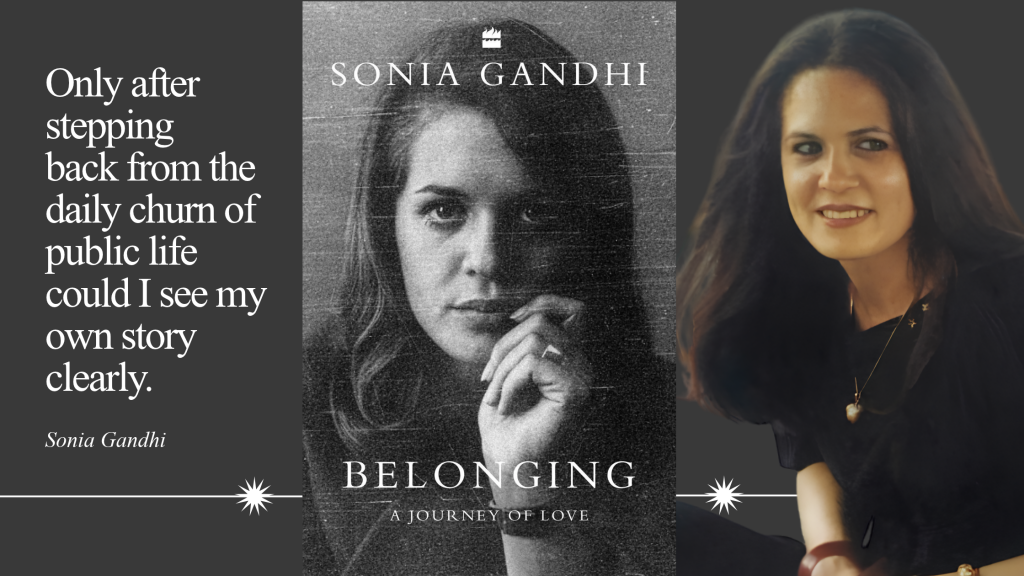
She described the book as personal rather than political and said she wanted to portray her family as she had known them.
For some public figures, distance from events changes what they feel ready to share. For others, circumstances determine when their stories can finally be published.
When Is the Right Time to Look Back?
Barack Obama’s A Promised Land arrived in November 2020, nearly four years after he left the White House. It revisited his early political career and first presidential term while the debates surrounding his administration were still relatively fresh.
Nelson Mandela’s Long Walk to Freedom followed a different path. He began writing on Robben Island in 1976, but the autobiography was published in 1994, the year he became South Africa’s first democratically elected president. Its journey to publication was shaped by imprisonment, secrecy and South Africa’s political transformation.
Neither book followed a simple formula of waiting until public life was over.
Time also changes how experiences are interpreted. Decisions that once seemed urgent can look different after twenty years. Certain details acquire new significance, while others fade from memory.
And memory itself is hardly an archive. Distance may offer perspective, but it can also make recollections harder to verify.
When a Personal Account Becomes Political
Sonia Gandhi has described Belonging as a personal memoir. Yet a life closely tied to the Nehru-Gandhi family inevitably intersects with India’s political history.
Her recollections touch on the Emergency, the 1984 anti-Sikh riots and the Babri Masjid dispute. Following publication, the BJP accused her of softening the Congress party’s historical record and challenged her treatment of these events.
These objections do not establish that her recollections are inaccurate, but they demonstrate how quickly a personal memoir can become part of a larger political argument.
Public figures possess firsthand knowledge of events that may never have been fully documented. They also have relationships, reputations and political legacies that can influence what they choose to remember and disclose.
A memoir can therefore be valuable historical material without being treated as the definitive account.
Who Gets the Last Word on History?
There are already competing accounts of episodes in Sonia Gandhi’s political life.
Former external affairs minister Natwar Singh’s 2014 memoir, One Life Is Not Enough, discussed her decision not to become prime minister in 2004, among other events. Belonging now adds Gandhi’s perspective to a history that others have been narrating for years.
Publishing a memoir later in life gives public figures an opportunity to revisit an established narrative, clarify their positions or challenge how particular events have been remembered.
It also raises questions for readers. How much weight should we give an account written decades after the events? Can two people who witnessed the same moment remember it differently? And how do we distinguish personal recollection from the historical record?
Political memoirs can provide details that official documents and contemporary news coverage miss. Reading several accounts of the same period may expose disagreements, omissions and experiences that have received little attention.
Sonia Gandhi chose to tell her story after stepping back from active political life. Other leaders have published their accounts while still shaping the events they describe. The timing influences what they choose to reveal, what they can say openly and how their recollections are received.
A memoir may arrive decades after the events it describes, but its publication can bring those events back into public debate.