
When Did Scrolling Become Our Idea of Rest?
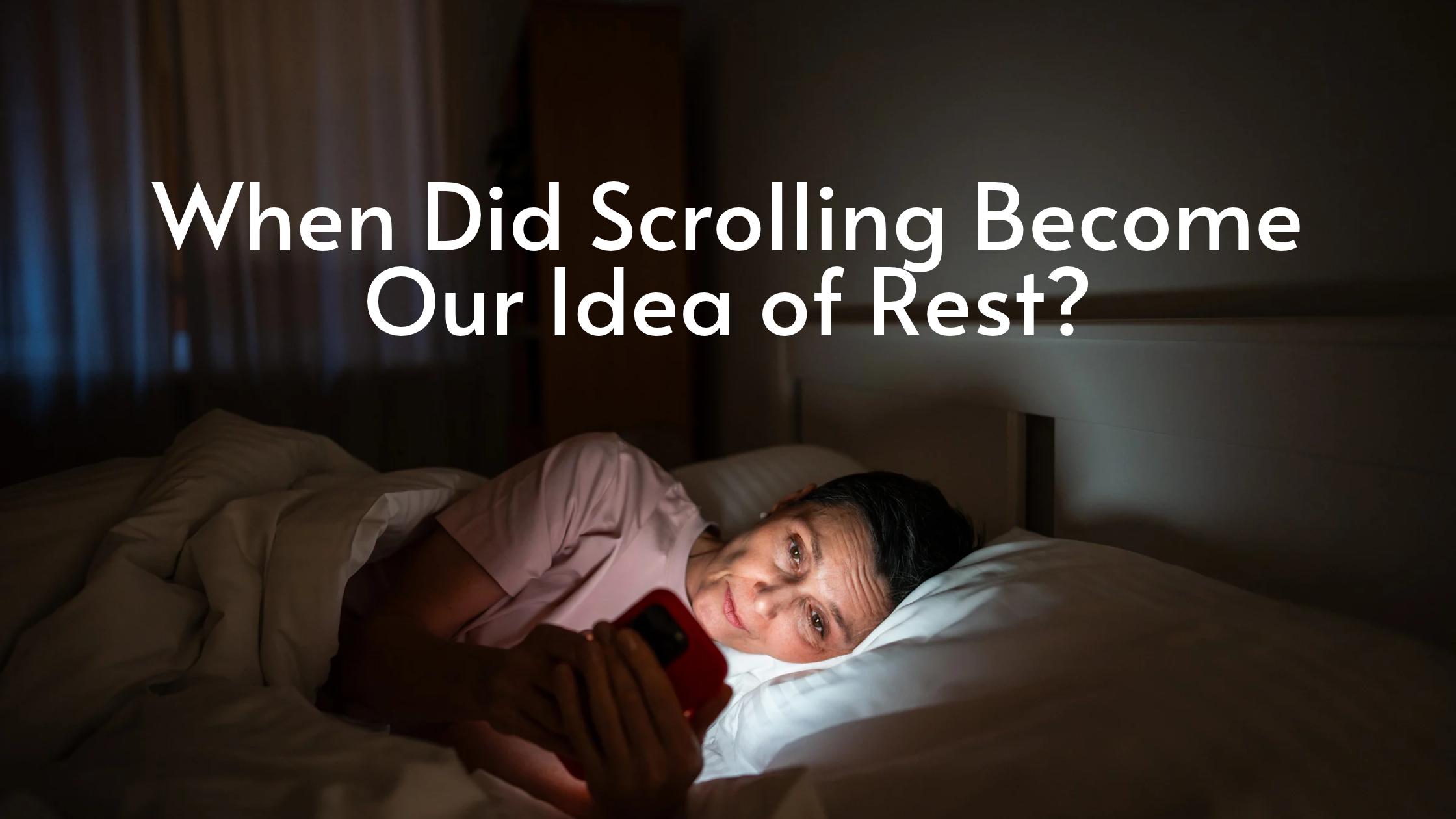
Imagine sitting in a café, waiting for your order. You have seven minutes to spare. Almost instinctively, you reach for your phone. You watch a few reels on Instagram, check WhatsApp and open LinkedIn to see what everyone else is doing professionally.
Your coffee arrives, and you put your phone down. Somehow, those seven minutes don’t feel like a break at all.
From waiting for a lift to sitting in the back of a cab, we have found ways to occupy nearly every moment of inactivity. Even after spending eight hours working on a laptop, many of us unwind by spending another two hours on our phones.
When did consuming content become our default response to feeling tired?
Why scrolling doesn’t always help us relax
In 2019, researchers at Rutgers University conducted an experiment involving 414 participants who were asked to solve word puzzles. Some took a break using their phones, while others used a computer or paper. Participants who used their phones during the break experienced greater mental depletion and performed less effectively when they returned to the task compared to those who took other types of breaks.
Consider what happens when you open Instagram after a particularly exhausting day at work. Within a few minutes, you could encounter a funny video, disturbing news, someone’s holiday photographs and an advertisement for something you have been wanting to buy. Each piece of content demands a different emotional or cognitive response.
You may have stopped working, but you are still processing information.
Digital burnout is a commonly used term for the mental and emotional exhaustion associated with sustained digital demands. Although it is not a standalone clinical diagnosis, experiences such as difficulty concentrating, irritability and feeling overwhelmed by online interactions can be reasons to reconsider our digital habits.
Counting the number of hours spent on a device only tells us part of the story. What we do during those hours deserves equal attention.
The strange relationship between boredom and entertainment
With an almost unlimited supply of entertainment available to us, we should theoretically be less bored than previous generations. Yet our consumption habits may be having the opposite effect.
A 2024 study published in the Journal of Experimental Psychology: General examined how switching between online videos affects boredom. Researchers Katy Tam and Michael Inzlicht found that participants expected switching between videos to relieve boredom. Instead, it increased boredom and reduced satisfaction and engagement.
Think about how frequently we abandon a reel within its first few seconds or pick up our phones midway through a film. The possibility of finding something more entertaining is always there.
Earlier, watching television meant choosing from a limited number of channels or waiting for a programme to begin. Today, entertainment platforms give us thousands of alternatives at any given moment. We can abandon something the instant it stops holding our attention.
This changes our experience of leisure. Part of the time we spend seeking entertainment is now spent deciding what deserves our attention next.
The pressure of being constantly available
There is another dimension to digital exhaustion that has little to do with entertainment.
WhatsApp groups have become extensions of our workplaces, school communities, residential societies and families. A single device carries conversations from nearly every aspect of our lives, often without any separation between them.
Researchers use the term workplace telepressure to describe the preoccupation with and urge to respond quickly to work-related digital communication. Studies have associated it with poorer sleep quality, burnout and difficulties recovering from work.
Even when an employee is technically off duty, the anticipation of another message can make it difficult to disengage from work.
And while turning off notifications is often recommended, how practical is it for someone working in an organisation where responsiveness outside office hours is considered a sign of commitment?
Any conversation about digital wellbeing must also address workplace culture and the social expectations we have created around accessibility. Individuals cannot be expected to manage digital exhaustion entirely on their own when the people and institutions around them demand constant availability.
Do we really need a digital detox?
For people whose livelihoods, relationships and everyday responsibilities depend on the internet, completely disconnecting may neither be practical nor desirable.
A more useful starting point could be examining the purpose behind our screen use.
Watching a film you have been looking forward to is a different experience from spending an hour searching for something to watch. Having a video call with a friend can be emotionally rewarding, even after a long day spent working online.
We could also reconsider how we take breaks. Instead of automatically opening another application between meetings, we could give ourselves a few minutes away from incoming information. Workplaces could establish clear expectations around after-hours communication, allowing employees to finish their working day without remaining mentally on call.
There is also room to bring back activities that have no measurable outcome. A hobby does not need to become a side business. Reading does not always require an annual target. An enjoyable evening need not produce photographs for social media.
We have become remarkably efficient at filling our spare time. The question is whether we are getting from it what we originally needed: rest.