

The Little Restaurant in the Forest Is Not as Innocent as It Sounds
Every now and then, a song arrives on the internet looking harmless. It sounds soft, the visuals are pretty, and the title feels like something from a children’s book. Then when it keeps showing up on our feed, we get curious and want to dig deeper.
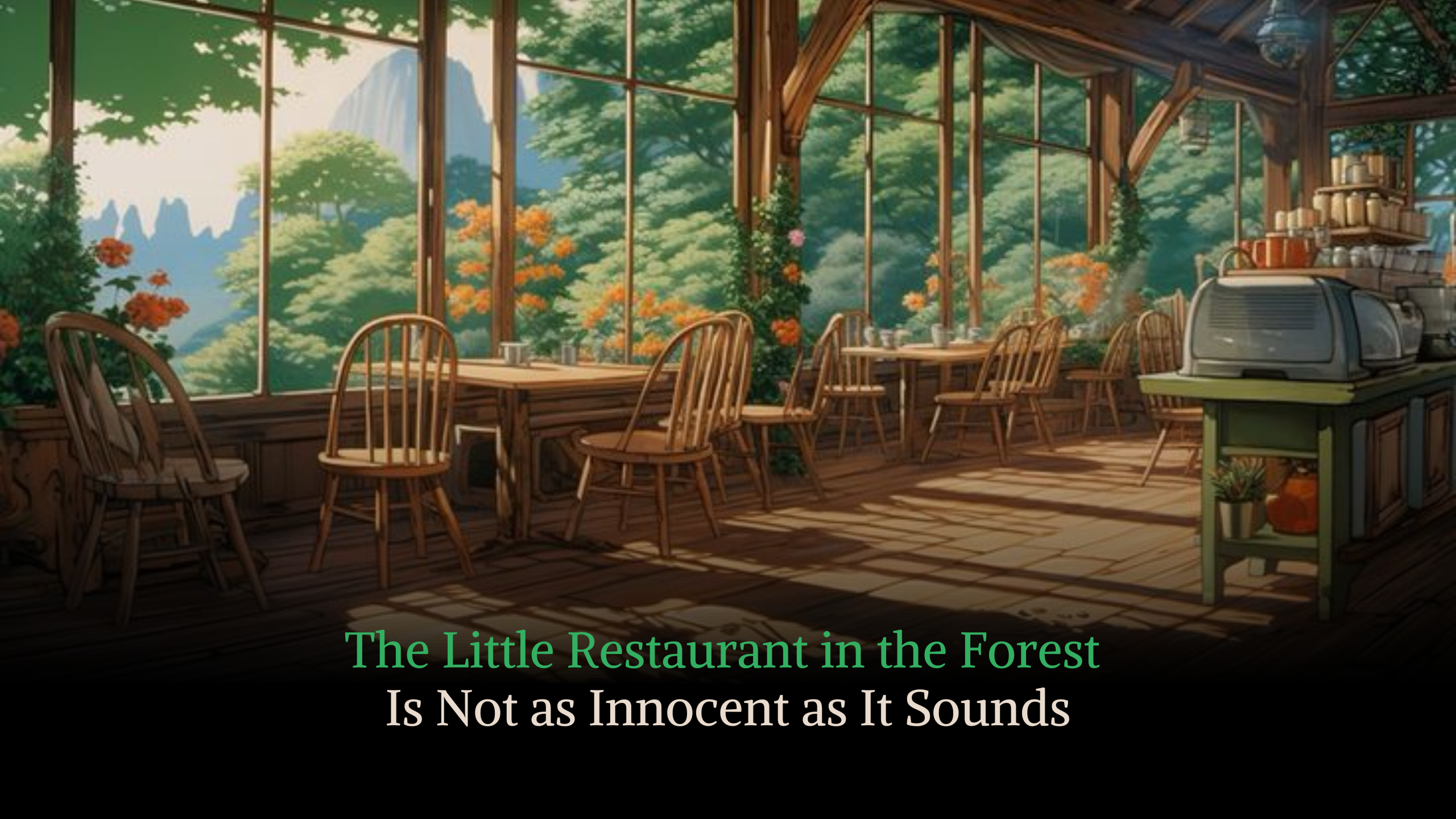
That is what happened with Mori no Chiisana Restaurant, which translates to The Little Restaurant in the Forest. On the surface, it seems innocent. A small restaurant in a forest sounds like a warm and safe image, almost like a story told to children.
But since this song was the background music of literally every cooking video we saw, we poked around and found out it is actually about death!
However, it does not announce tragedy or use grief in a loud way. Instead, it does something more interesting. It hides unease inside softness. Woaahhh, right?
Why a restaurant changes the way we think about death
Death is usually imagined through distance, like a road, a river, a door, a journey, or a light at the end of something.
Here, the possible image is different. It is a restaurant. That changes the feeling completely.
A restaurant is not a frightening place. We know the rules of a restaurant. We enter, sit, wait, are served, eat, and leave. There is order to it, and there is also comfort.
So when the idea of death or the afterlife is placed inside a restaurant, it becomes easier to approach. It gives the unknown a familiar shape.
This is probably why the song feels unsettling and comforting at the same time. If the restaurant is a place between life and death, then it is not shown as dark or violent. It is quiet and almost polite. It receives people.
That is a very clever emotional choice, because fear becomes easier to sit with when it is disguised as something ordinary.
Food is never just food in grief
Food has always been connected to memory.
We remember people by what they cooked, what they loved eating, what they fed us, what they insisted we try, what they made on festivals, what they packed for travel, and what they ordered every single time.
After someone is gone, these small details become overwhelming.
A smell from the kitchen can bring someone back for a second. A recipe can suddenly feel like an inheritance. A dish they loved becomes even more special or something we avoid now. A dining table can remind us exactly who is missing.
That is why food appears so often in stories about grief.
A restaurant, then, becomes an interesting setting for a song like this. It is a public place, but it can hold very private feelings. People come in hungry, tired, unsure, alone, or in need of comfort. If we read Mori no Chiisana Restaurant through this lens, the forest restaurant begins to feel less like a cute location and more like a place where memory waits.
It may be about being received one last time, or about the comfort we imagine when we cannot understand the end.
The forest is also doing a lot of work
In stories, forests are rarely neutral places. They are where children get lost, rules change, and people meet strangers, spirits, witches, animals, ghosts, or versions of themselves they did not know existed.
The forest in this song immediately takes the restaurant out of ordinary life.
A restaurant on a busy street would feel normal. A restaurant deep inside a forest feels different. It feels hidden, and slightly unreal. That is what makes the song uneasy. The restaurant gives us comfort, but the forest tells us we are no longer in a familiar place.
A little restaurant in the forest feels like a threshold. It feels like a place we reach only after leaving the usual path.
Cute things with dark hearts
One reason the song works is because it uses that kawaii, comforting surface.
Japanese storytelling often does this very well. Cute does not always mean light, and gentle does not always mean happy. A story can have warmth, sweetness and beauty while still carrying loneliness or death inside it.
We see this across many forms of Japanese pop culture and storytelling. A simple setting can hold grief, a childlike visual can hide fear and a calming song can leave us disturbed.
Sadness does not always arrive with a warning label. Mori no Chiisana Restaurant uses that same emotional trick. It does not sound like a song that is trying to break us. Rather, it lets us lower our guard.
Why soft grief can feel more painful
Openly tragic art gives us some preparation. We know what we are entering. We know we are meant to feel sad.
But soft grief works differently. It sneaks in like Mori no Chiisana Restaurant and simply creates an atmosphere that lets us realise, slowly, that something is wrong.
That slow realisation can be very powerful. It makes us participate in the meaning.
Now, when we come across things like this in pop culture, we go ahead and do our research, maybe even write an article like this. We may be talking about lyrics and symbolism, but underneath that, the humans in us are talking about fear, loss, death, memory and the hope that endings are not as cold as we imagine.
The afterlife as something ordinary
There is something strangely human about imagining the afterlife as an ordinary place. A place where someone may offer us food, someplace where we may rest and not have to explain ourselves.
We may not know what comes after life. We may not even believe anything comes after. But stories allow us to imagine, and sometimes that is less about belief and more about comfort.