
Slow Content Is Here to Stay — And the Algorithm Can’t Stop It
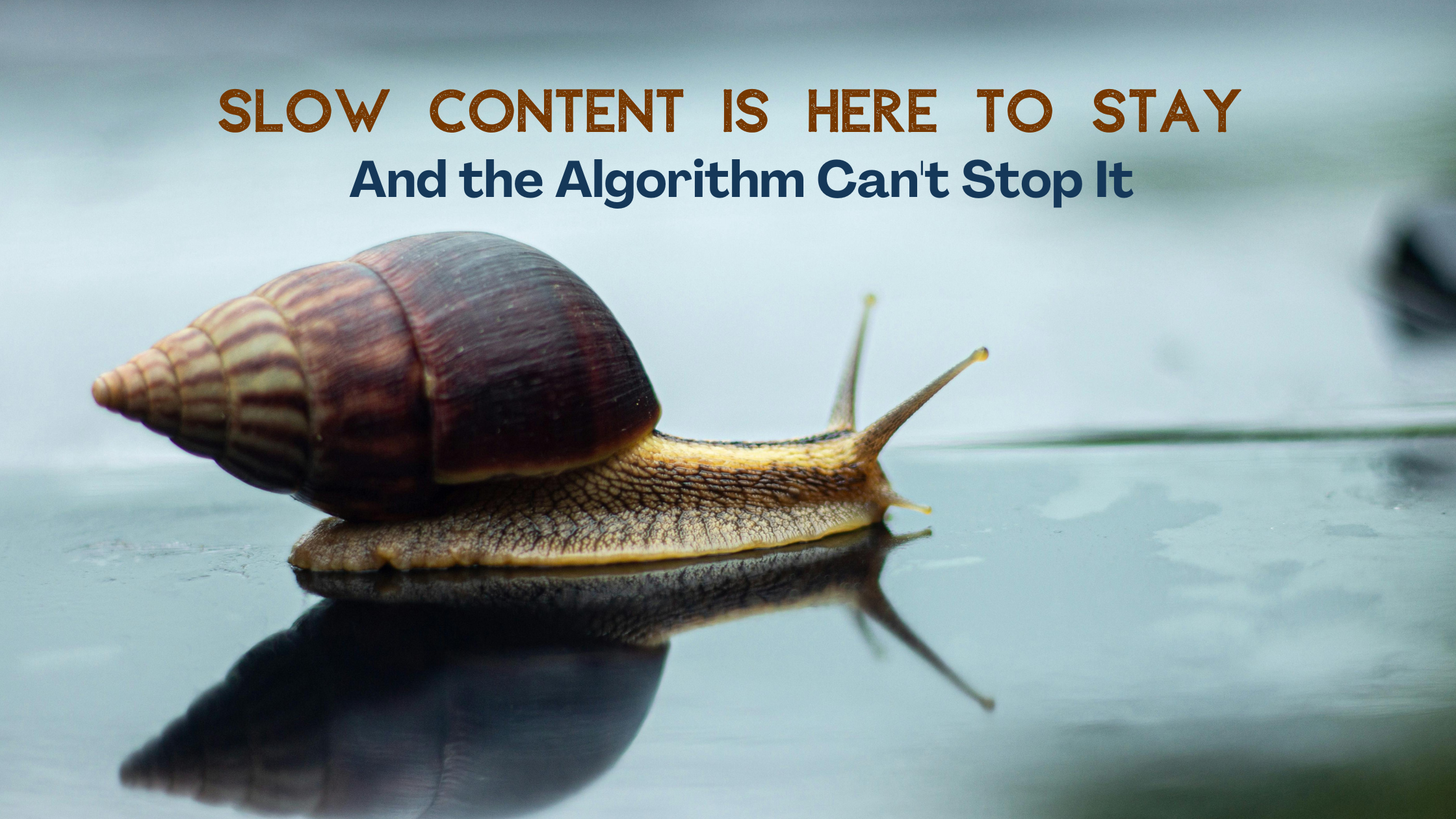
Slow content these days is a conscious choice that keeps us away from the daily stimulation, especially from algorithm-chasing content. Today, it is all about wholesome life snippets and thoughtfully curated content that outlast any trend. Slow content is gaining immense traction because both creators and audiences are burned out from doomscrolling and the fast-scroll cycle.
Creators are increasingly influenced to showcase raw, in-depth posts, while brands slow down their content calendars, and readers actively engage with slow or day-to-day content rather than the latest trends.
What Exactly Is “Slow Content”?
Slow Content is all about intentions. It is not about pushing posts every day to feed the algorithm; creators today prioritise originality and relevance over frequency. On the other hand, experts state that this method helps to connect with a larger audience and provide quality content.
No, this is not the same thing as going silent or disappearing. A creator deliberately practicing slow content could still post several days a week. The difference here is that every piece is made to hold your attention and not to win the first three-second race. It is like consuming slow yet meaningful content for your mind and soul. Not everything needs that adrenaline rush.
Why Is Everyone’s Attention Span Actually Shrinking?
As per Gloria Mark, PhD, a researcher at the University of California, Irvine, in an American Psychological Association podcast. According to her 2004 study, the average attention span on any screen was just 2.5 minutes. It has gotten drastically shorter over the years. Imagine they found it to be just 75 seconds around 2012.
That decline is real, but before we get into it, let’s clear up a popular myth about attention spans that we’ll see in the next section.
Wait, Didn’t We Already Have Shorter Attention Spans Than Goldfish?
Probably not! And this is a good example of why sourcing really matters. In 2015, the Internet took the spotlight away from the widely repeated claim that human attention span had dropped to 8 seconds, shorter than a goldfish’s. Later, many of them tried to verify the actual sources and statistics, but none were verified. The numbers spread anyway, and it became news.
The real research by Dr Mark doesn’t depend on the goldfish comparison, but today it is more concerning because it is real: a well-documented decline in human focus, constantly triggered by notifications, algorithms, and instant content meant to be consumed in seconds.
India’s Regional Creators Were Doing This Before It Had a Name
Outside India’s major metro cities, a lot of regional and vernacular content has been surfaced as “slow content” for years. This is simply to show how community-rooted storytelling takes place. Creators working in regions like the coastal Konkan often build slower-paced content around local traditions, language, and monsoon life – this kind of storytelling can never follow a trending audio format but remains raw because the audience is there for a virtual feel and not speed by any means. Quite a reminder to see the beauty in the things around you as you slow down.
Does Slow Content Actually Perform Better?
Well, let’s be honest, performance doesn’t happen overnight. Good things do take time. Slow content builds long-term trust and loyalty among the audience, not instant likes. This is a strategy to build retention, not just virality. For creators or brands without a large following, slow content works best as a complement, not a replacement, for constant posting, especially before there is a set audience actually willing to wait for quality.
What Can Creators Do About It This Week?
If you are trying to shift your content approach, start small and don’t just drastically change your Social media calendar:
- Try to audit your last 10 posts. The ones made to fill the slots and others where you actually cared to post. Cut the former.
- Pick one weekly anchor piece. Instead of the grid, publish one piece – could be a nice reel, post or a detailed carousel. The one that took actual real thought and carried it that week.
- Buffer Day – Use this day for research or to film a specific concept; reduce the pressure to push posts to meet the algorithm.
- Track activity – Just look at your shares and saves. Slow content often wins out, and comments show real engagement.
- Say less, but be clear: One well-thought-out, well-planned content piece will outperform other rushed posts.
Overall, slow content is not disappearing from the feed – it is more about when you show up; it is actually worth the scroll-stopping.