
A Secret That Survives Twenty Years: The Thriller Premise of The Fourth Girl
Some secrets become harder to confront the longer they survive.
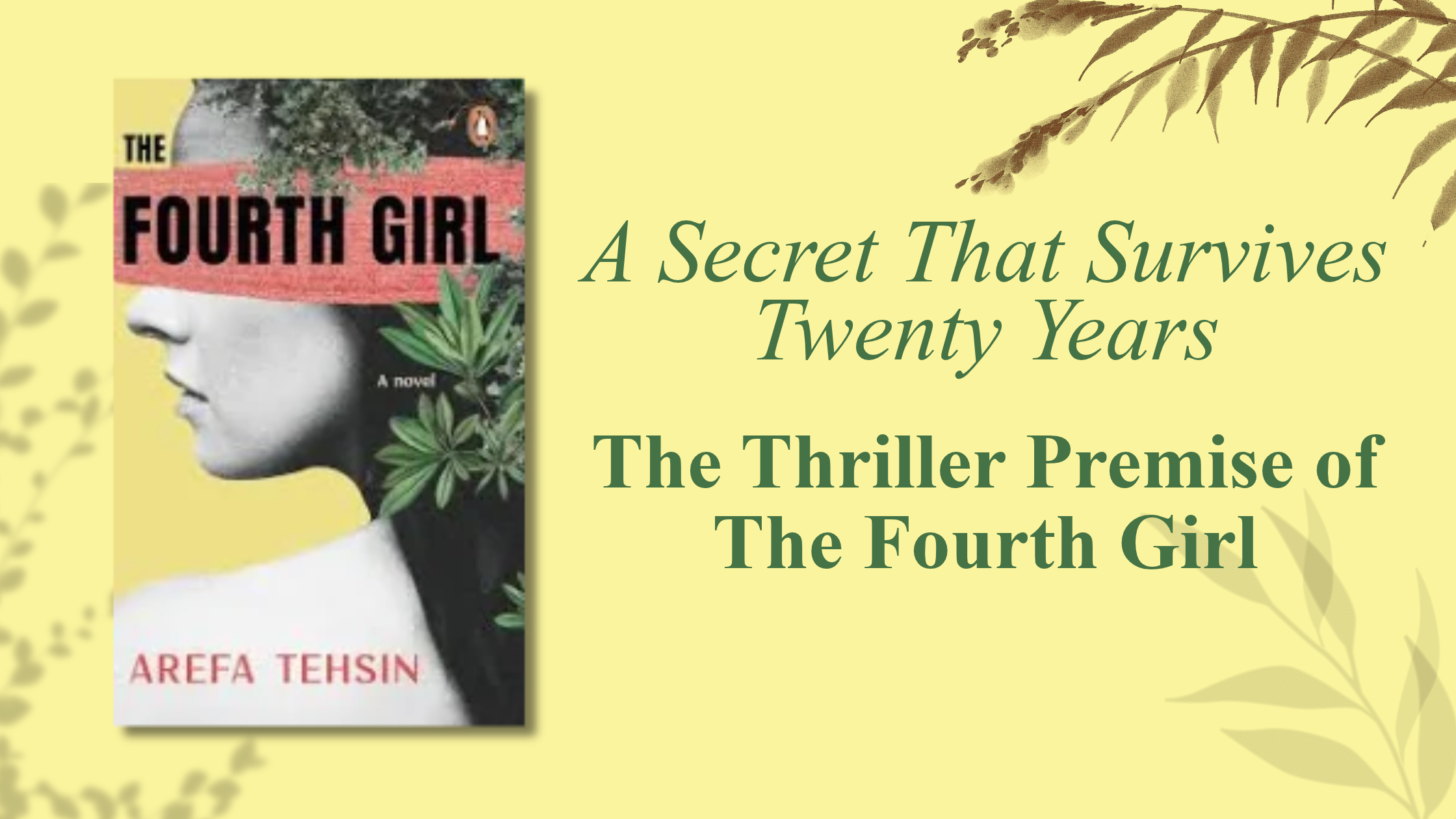
In Arefa Tehsin’s The Fourth Girl, published by Penguin Random House India in 2026, three women are brought together twenty years after a mysterious disappearance they never fully left behind. A funeral reunites them in Colombo, a journalist begins asking questions, and the past they had buried starts demanding answers. The psychological suspense thriller uses an old friendship and a missing girl to examine what happens when memory, guilt and unfinished business return years later.
Why do old secrets work so well in thrillers?
A secret that has survived for years gives a thriller two timelines at once.
There is the original event, when something happened and was never fully understood. Then there is the present, when people who have spent years building new lives are forced to revisit it.
That gap creates tension because memory is rarely neat. Details blur, people remember the same event differently and silence can become part of the story itself. The mystery may belong to the past, but the consequences have had years to grow.
That is the premise at the centre of The Fourth Girl. Three women have lived for two decades with the disappearance of someone who was once part of their lives. They are now a bestselling author, a diplomat and the wife of the Indian cricket captain. When they meet again at a funeral in Colombo, a journalist begins investigating what happened to the fourth girl.
The question threatens the lives they have built since.
What happens when friendship becomes part of the mystery?
Friendship gives a thriller something that a conventional investigation does not automatically have: shared history.
People who once knew each other closely carry memories of old loyalties, arguments, secrets and earlier versions of one another. When something unresolved sits inside that history, even an ordinary conversation can carry another meaning underneath it.
In The Fourth Girl, the disappearance connects four young women and a trip near the forests of Udaipur. Twenty years later, the remaining three are no longer simply friends revisiting an old memory. They have careers, relationships and public lives that can be disturbed by what is uncovered.
The mystery therefore becomes personal long before any answer arrives. It asks what people owe an old friendship, and what happens when reopening the past changes the way they see one another in the present.
Why does memory become part of the investigation?
Thrillers often use memory because it sits somewhere between evidence and interpretation.
A remembered event can feel completely certain to the person recalling it and still be incomplete. People retain some details and lose others. They may spend years making sense of something through the version they have chosen to live with.
A twenty-year gap gives that uncertainty room to expand.
The journalist investigating the disappearance in The Fourth Girl is not only looking for facts. He is dealing with people who have already spent years remembering, avoiding and explaining what happened in their own ways.
That makes the premise larger than a simple whodunit. The question is not only what happened then, but what twenty years of silence have done to everyone involved.
Why do some thrillers make readers want to go back?
Two reactions we received from readers of The Fourth Girl point to something interesting about mysteries built around buried histories.
One reader said they recommended the book to people around them after finishing it, and that those readers enjoyed it too. Their note singled out the climax, even though the comment itself was left unfinished. Another response was much simpler: “I want to re-read the book!”
One reader said they recommended the book to people around them after finishing it, and that those readers enjoyed it too. Another response was simply: “I want to re-read.”
That makes sense for a thriller built around old secrets and incomplete memories. Once you know where the story is headed, going back can make earlier details feel different.
From nature writing to murder mysteries
Arefa Tehsin’s writing career has moved across very different forms.
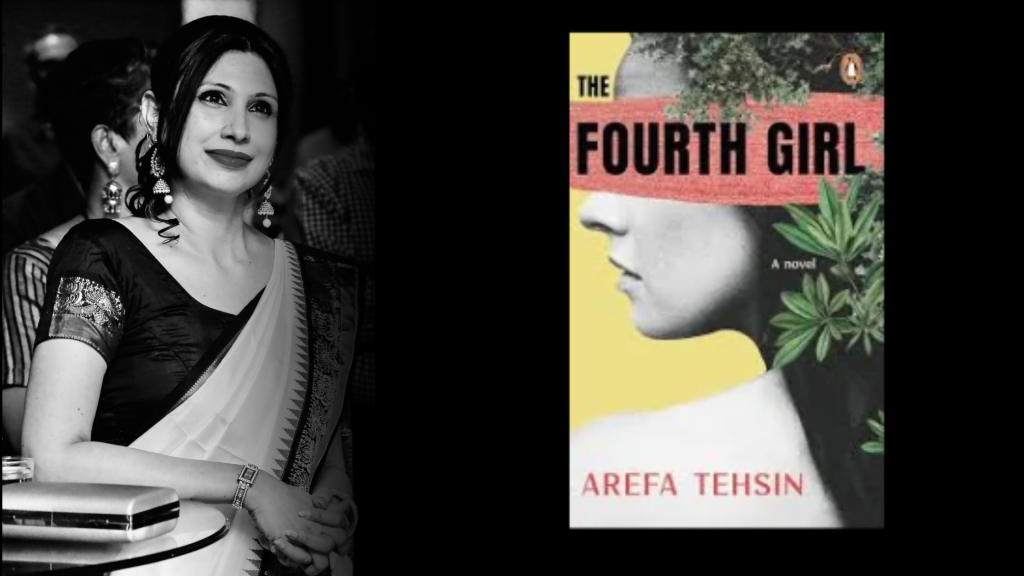
She has written more than twenty books for children and adults, including fiction, non-fiction and nature writing, and has contributed to publications including The Indian Express, The Hindu, Hindustan Times and Conde Nast Traveller.
Nature has remained a recurring part of her work. Tehsin grew up in Udaipur with her naturalist father, Raza H. Tehsin, and later served as Honorary Wildlife Warden of Udaipur. Her books for younger readers include Wild in the Backyard, The Great Indian Safari and The Elephant Bird.
Her fiction for adults moves that familiarity with place into darker territory. Her first adult novel, The Witch in the Peepul Tree, is a murder mystery rooted in Udaipur. The Fourth Girl moves between Udaipur and Colombo, while forests, travel and landscape remain part of its world.
Her work may move between children’s literature, nature writing and crime fiction, but place and close observation remain recurring threads.
Read The Fourth Girl with us
The Fourth Girl is one of the 12 titles on our Blogchatter Book List 2026 Longlist.
From the many books recommended by readers, authors and publishers, 12 made the Longlist. If you pick this one, leave your review on its book listing on the Blogchatter website once you finish reading.
We’re also hosting a lucky draw for readers exploring the Longlist:
Read 1–5 books: 5 winners receive 300 Reward Points each
Read 6–12 books: 5 winners receive 500 Reward Points each
A review on the Blogchatter book listing is required for eligibility. Blogs, reels, Stories and other content are welcome, but optional.
You have until 30 November to read and review. More details about voting will be shared towards the end of the month.
About the author
Arefa Tehsin is an author, naturalist and columnist from Udaipur. She has written more than twenty books across children’s fiction, non-fiction, nature writing and adult fiction. She has also written for publications including The Indian Express, The Hindu, Hindustan Times and Conde Nast Traveller. Her first adult novel, The Witch in the Peepul Tree, was recognised by the Asian Prize for Fiction. Read more about Arefa Tehsin.
Note: We introduced the Blogchatter Book List in 2025 when the JCB Prize for Literature was discontinued. The Blogchatter Book List is our own reader-led initiative built around community recommendations, reading, reviews and voting.