
Murder in 1895 Hyderabad: Where Blood Caste Meets Crime, Caste and Empire
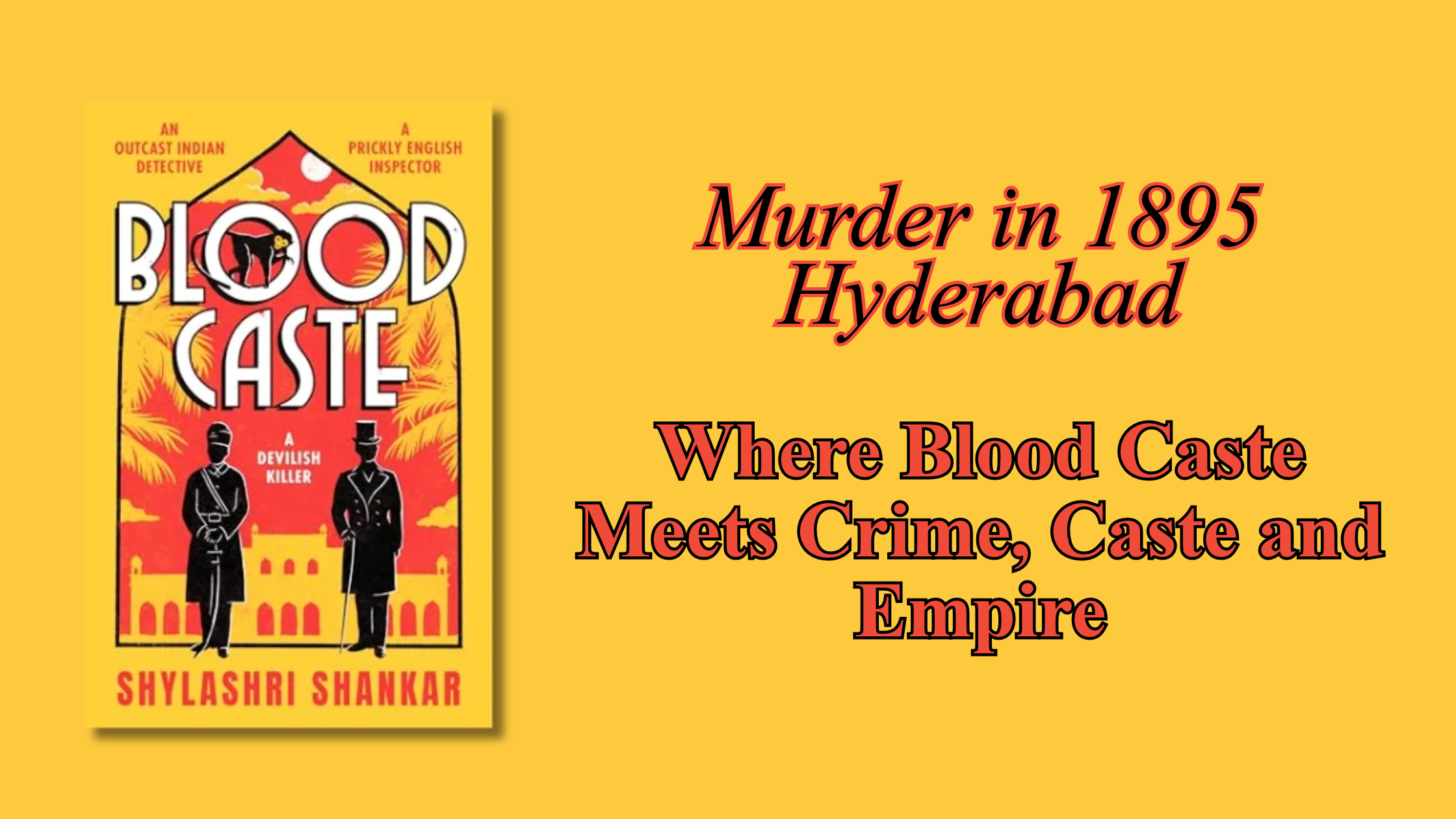
A murder investigation is supposed to follow evidence. But what happens when the suspects are powerful enough to make even asking questions difficult?
Shylashri Shankar’s Blood Caste, published by Canelo, places that problem in Hyderabad in 1895. Three bodies are discovered with mutilations resembling the Whitechapel murders associated with Jack the Ripper. Chief Inspector Soobramania, known as Soob, begins investigating, only to find that the men under suspicion include a Russian grand duke, an English earl and a Deccani noble.
The mystery unfolds inside a society shaped by caste, rank and colonial rule, where an investigator cannot treat every suspect in quite the same way.
What happens when the suspects outrank the investigator?
Most crime fiction gives its detective obstacles. Evidence disappears, witnesses lie or suspects refuse to cooperate.
Blood Caste adds social position to that list.
The three men who attract suspicion are hardly ordinary suspects. Two are visiting European aristocrats, while the third is a Deccani noble and the stepson of one of the victims. Their status immediately complicates how freely Soob can investigate them.
The premise of the novel places him in a world where wealth and birth can affect how far an investigation is allowed to go. Following the evidence is only one part of his job. He also has to navigate the people and institutions surrounding it.
How does caste change a crime investigation?
Caste historically shaped far more than identity. It influenced occupation, social status, access and everyday relationships between communities.
Put a murder investigation inside that structure and questions appear before the first clue is even examined. Who can enter whose home? Whose testimony is taken seriously? Who can question somebody of higher status without consequences?
Crime fiction already depends heavily on questions of credibility. Detectives decide which witnesses to believe, which suspects to pursue and which inconsistencies deserve attention. In Blood Caste, those decisions happen in a world where people do not begin from equal positions.
The title itself points directly to the hierarchy surrounding the murders. Caste is not simply part of the historical setting. It affects the conditions under which the investigation takes place.
Why does colonial Hyderabad make the case more difficult?
Hyderabad in 1895 was ruled by the Nizam, but it existed within the wider political system of British India. Indian and British structures of authority operated alongside one another.
That becomes particularly important when European aristocrats enter the investigation.
Soob has to work with Inspector Wilberforce of the British Residency Police while looking into men connected to the British establishment. The case therefore crosses institutional as well as social boundaries.
The question of who has the authority to investigate whom cannot be separated from the politics around the case.
This gives the mystery a particularly complicated setting. Soob is dealing with murder, but he is also operating inside a city where rank, colonial relationships and different systems of authority can determine what an investigator is able to do.
Why take a Ripper-style crime out of Victorian London?
The murders in Blood Caste deliberately recall the Whitechapel killings that made Jack the Ripper one of Victorian Britain’s most notorious figures.
Shankar has written that the idea began with her interest in Sherlock Holmes, Victorian London and Jack the Ripper. Instead of recreating that familiar world, however, she asked what might happen if a similar killer appeared in nineteenth-century Hyderabad.
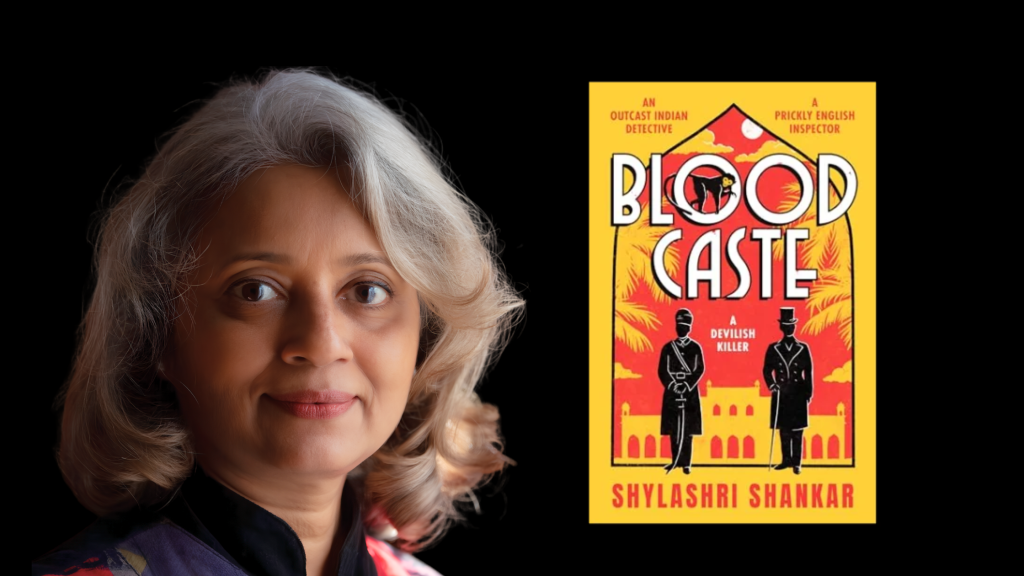
Her own memories of the city became part of the idea. Shankar spent her childhood and teenage years in Hyderabad and later returned to its archives, newspapers and historical records while researching the novel. She writes about visiting the old city and studying accounts from the period to understand its everyday rhythms.
Moving the Ripper reference to Hyderabad changes the kind of story that can be told around it. The late nineteenth century was also a period of princely states, colonial influence, emerging nationalism and competing ideas of modernity in India.
Shankar chose 1895 partly because Hyderabad was beginning to encounter changes such as bicycles and electricity alongside new conversations about equality, nationalism and freedom.
Shylashri Shankar’s route from political science to crime fiction
Blood Caste is Shylashri Shankar’s fiction debut, but research has been central to her work for years.
A political scientist and former senior fellow at the Centre for Policy Research, her research has covered constitutionalism, religious freedom, civil liberties, courts and questions of justice.
Her academic book Scaling Justice: India’s Supreme Court, Anti-Terror Laws and Social Rights examined the judiciary and citizenship rights. She later turned to food history with Turmeric Nation: A Passage Through India’s Tastes, which won the 2021 AutHer Award for Best Non-Fiction.
Shankar has also been clear that academic research did not automatically make writing fiction easy. While working on Blood Caste, she found that research helped with historical detail, plotting and structure, but character and scene-building required a different kind of practice. She spent years revising the manuscript and learning the craft of fiction.
That long process eventually led to Blood Caste, which won the 2022 Spotlight First Novel Award and was longlisted for the 2022 CWA Debut Dagger.
The novel is the first book in her Murder in the Deccan series.
Read Blood Caste with us
Blood Caste is one of the 12 titles on our Blogchatter Book List 2026 Longlist.
From the many books recommended by readers, authors and publishers, 12 made the Longlist. If you pick this one, leave your review on its book listing on the Blogchatter website once you finish reading.
We’re also hosting a lucky draw for readers exploring the Longlist:
Read 1–5 books: 5 winners receive 300 Reward Points each
Read 6–12 books: 5 winners receive 500 Reward Points each
A review on the book’s Blogchatter listing is required for eligibility. Blogs, reels, Stories and other content are welcome, but optional.
You have until 30 November to read and review. More details about voting will be shared towards the end of the month.
About the author
Shylashri Shankar is a political scientist, food historian and author based in New Delhi. She was formerly a senior fellow at the Centre for Policy Research, where her work covered courts, citizenship, religious identity and justice. Her books include Scaling Justice: India’s Supreme Court, Anti-Terror Laws and Social Rights and Turmeric Nation: A Passage Through India’s Tastes. Blood Caste is her fiction debut and the first book in the Murder in the Deccan series.
Note: We introduced the Blogchatter Book List in 2025 when the JCB Prize for Literature was discontinued. The Blogchatter Book List is our own reader-led initiative built around community recommendations, reading, reviews and voting.