

Hunger Strikes, Hashtags and Gen Z: How Protest in India Is Changing
In July 2026, Sonam Wangchuk ended a 26-day hunger strike in Delhi. The engineer, education reformer and activist had joined a youth-led movement protesting alleged leaks and irregularities in the NEET examination and demanding greater accountability in India’s examination system. By then, what had begun as a relatively small online movement had grown into nationwide protests.
There was something unusual about the way the movement took shape. At its centre was the hunger strike, one of the oldest and most recognisable forms of protest in India. Around it was something much more contemporary: memes, reels, hashtags and a loosely organised youth movement calling itself the Cockroach Janta Party.
Together, they offered an interesting look at what protest in India can look like in 2026.
Who Is Sonam Wangchuk?
Sonam Wangchuk has spent much of his career working in education and sustainability in Ladakh. He co-founded the Students’ Educational and Cultural Movement of Ladakh (SECMOL), which has worked on alternative approaches to education, particularly for students who struggled within the conventional school system.
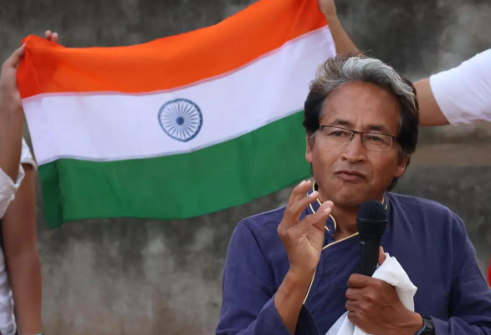
He is also known for developing ice stupas, artificial glaciers designed to store water as ice during winter and release it gradually during warmer months. His work in education and sustainable development earned him the Ramon Magsaysay Award in 2018.
For years, Wangchuk has also been popularly associated with Phunsukh Wangdu, the character played by Aamir Khan in 3 Idiots. That connection, however, is not as straightforward as it is often presented. In July 2026, Khan said the character was not based on Wangchuk, while Wangchuk himself has also distanced himself from being described as the inspiration for the character.
In recent years, Wangchuk has become increasingly visible through public protest as well. His earlier campaigns focused largely on Ladakh, including demands for constitutional safeguards and environmental protections for the region.
Why Did He Join This Protest?
This time, the issue was not Ladakh.
The Cockroach Janta Party, or CJP, had begun organising demonstrations over alleged exam paper leaks and irregularities. In May, the National Testing Agency scrapped the NEET examination after allegations that questions had been leaked; around two million students had taken the test. A re-test was subsequently held in June.
CJP founder Abhijeet Dipke began protests demanding the resignation of Education Minister Dharmendra Pradhan, and the movement later started a sit-in at Jantar Mantar. Wangchuk joined the protest on June 28 and began a hunger strike in support of the movement.
His involvement gave the movement greater visibility. By July, crowds had grown considerably and demonstrations had spread beyond Delhi. Tens of thousands attempted to march towards Parliament on July 20, where protesters and police clashed.
Wangchuk ended his fast after 26 days following negotiations and appeals from political leaders concerned about his health and the possibility of further violence.
The protests, however, continued. On July 25, Dharmendra Pradhan resigned. The government subsequently announced a task force to overhaul the examination system and introduced proposed changes to public examination laws, including tougher penalties for those involved in paper leaks.
Who Are the Cockroach Janta Party?
Despite the name, the Cockroach Janta Party is not a conventional political party.
The movement grew out of online satire and initially involved only a few hundred young people. It used social media, memes and videos to talk about exam leaks, unemployment and frustrations around India’s education system.
The unusual name and informal style made it look very different from traditional political organisations. But the mobilisation did not remain online.
Thousands eventually gathered at Jantar Mantar, while protests took place in other cities as well. What started through digital networks became a physical movement on the streets.
After Pradhan resigned, CJP agreed to call off that phase of the demonstrations. Within days, however, the group accused the government of not honouring assurances concerning action against protesters and warned that demonstrations could resume.
Since then, the movement has continued to take up education-related issues. In August, it launched the “School Thik Karo” campaign focusing on infrastructure and conditions in government schools.
When the Hunger Strike Meets the Hashtag
India has a long history of hunger strikes as a form of political protest. They depend heavily on physical presence. As the fast continues, attention increasingly turns towards the person undertaking it and the demands they are making.
Social media works differently. A video from a protest site can travel around the country within hours. People who may never attend a demonstration can follow developments, share posts, argue about them or decide to participate.
The 2026 protests brought these two forms together.
Wangchuk’s hunger strike gave the movement a familiar form of political protest, while digital platforms helped carry it far beyond Jantar Mantar.
CJP itself had emerged through online satire. Yet some of its largest moments happened offline, with thousands of people gathering physically in Delhi and other cities.
It is difficult, then, to separate the “online protest” from the “real protest”. One helped build the other.
How Gen Z Is Finding Its Own Language of Protest
There is also something distinctly generational about the language of movements such as CJP.
Political communication no longer reaches young people only through rallies, television debates, newspapers or speeches. It appears between memes, Instagram posts, videos and everyday conversations online.
That can make a movement appear unserious at first glance. CJP deliberately adopted an unconventional identity, using satire and internet culture to speak to young people already frustrated with examinations, unemployment and the education system.
But humour can make complicated issues easier to enter. Someone may first encounter a political issue through a meme and later read about it, discuss it or attend a demonstration.
At the same time, online popularity has obvious limits. A viral post does not automatically create policy change, and a trending hashtag can disappear almost as quickly as it appeared.
What happens after the viral moment is therefore worth watching.
CJP’s move from exam protests to a campaign around government schools suggests an attempt to turn short-term attention into a wider platform around education.
So, Is This the New Face of Protest?
Not entirely.
The events of 2026 do not suggest that traditional protest has been replaced by digital activism. If anything, they show how easily the two can now exist together.
A hunger strike can happen at Jantar Mantar while reels about it circulate across the country. A movement can begin as online satire and still bring thousands of people onto the streets. A meme can introduce someone to an issue that eventually becomes the subject of marches, negotiations and government action.
Wangchuk’s 26-day fast placed considerable national attention on demands that had begun with students, while the mobilisation around him showed how quickly a youth-led movement could grow beyond social media. The movement that grew around it has continued to find new issues and new ways of organising.
The language of protest in India is changing. The hunger strike and the street march have not disappeared. They now exist alongside the hashtag, the reel and, sometimes, even the meme.