
Why Indian Weddings Are Built for Romantic Chaos: Blame It on the Wedding Season
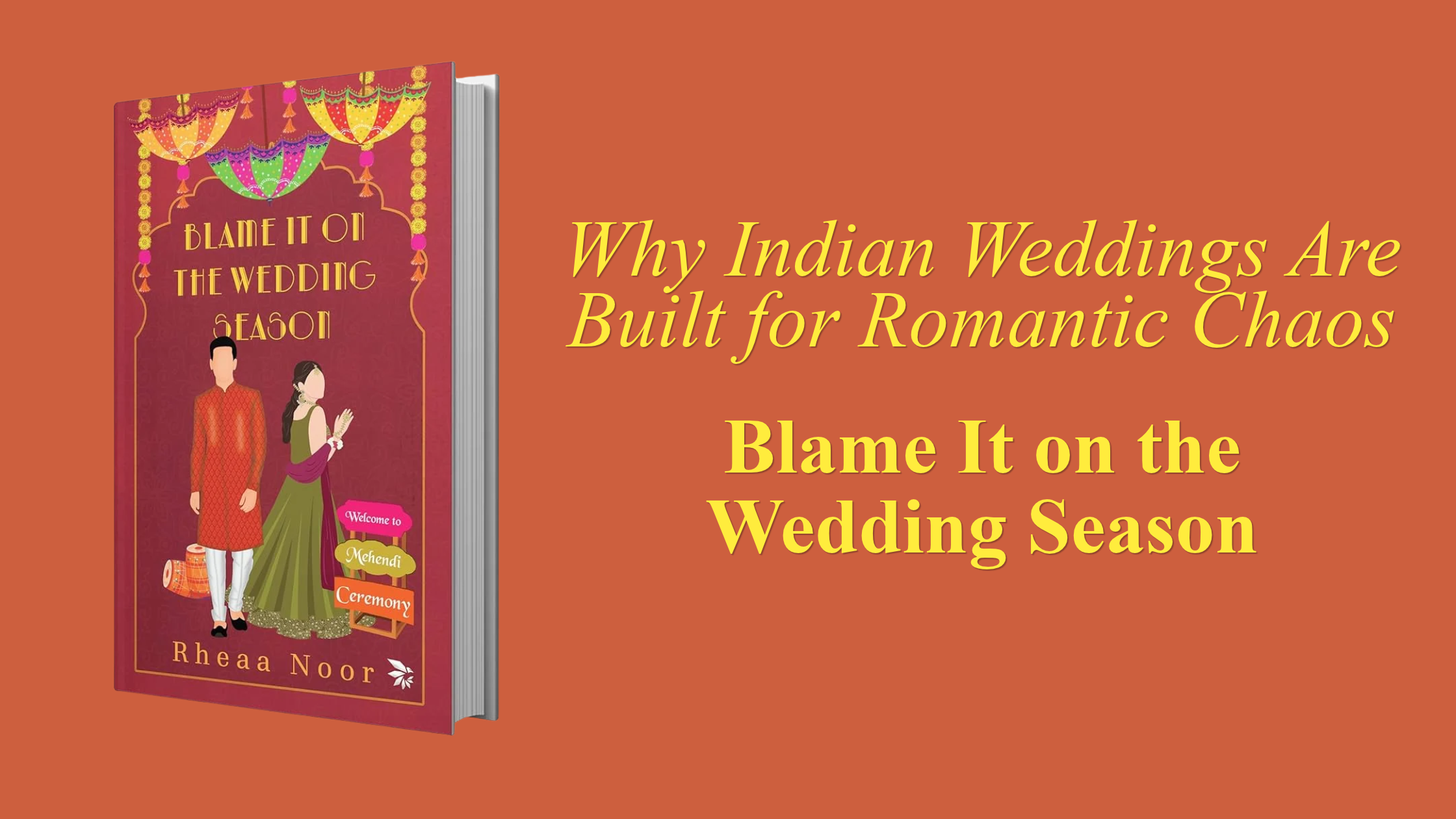
Indian weddings are unusually well suited to romantic comedy. They bring extended families together for days, turn private lives into public conversation and attach a schedule to nearly every hour. People who barely know one another are suddenly sharing cars, meals, dance rehearsals and responsibilities. Plans matter, but so does everything that goes wrong.
Rheaa Noor’s Blame It on the Wedding Season, published by NuVoice Press in 2026, places that chaos inside a Jaipur wedding. Bridesmaid Aanya Kapoor arrives with colour-coded lists and a plan for everything. Best man Advay Mehra arrives with charm, instinct and very little interest in following her system. The setup gives their romance exactly what a wedding provides best: proximity, expectations and no easy way to avoid each other.
Why do weddings work so well for romance?
A wedding comes with a deadline.
There is a fixed day, a fixed sequence of events and a large group of people who expect everything to happen on time. For romance, that creates useful pressure. Two people do not have months to decide whether they like each other. They are thrown into the same events, tasks and conversations over a few intense days.
Indian weddings add another layer because the celebration rarely belongs only to the couple getting married.
Cousins rehearse dances. Friends are assigned jobs. Relatives ask questions. Someone is late. Someone is offended. Someone has misplaced something important.
The wedding season itself amplifies that scale. In 2026, hotels were already reporting strong winter wedding demand, with popular dates filling early. For families, that means months of planning. For fiction, it means a setting where everyone is already operating under pressure before the love story even begins.
How does Blame It on the Wedding Season use that chaos?
Aanya and Advay are built around opposite instincts.
She plans. He improvises.
At her cousin’s Jaipur wedding, those differences immediately collide. The story moves through misplaced baraatis, mehendi mischief, a Sufi night, rooftop conversations and the constant presence of family around them.
That opposition suits a wedding because weddings require both kinds of people. Someone has to know where everybody needs to be. Someone else has to cope when nobody gets there on time.
The romance grows inside that friction.
A wedding also makes privacy difficult. Even a quiet conversation can happen under the eyes of cousins, friends or relatives. A rumour can move through a gathering faster than either person involved has time to respond.
In Blame It on the Wedding Season, that makes the relationship part of a larger social space rather than something happening separately from the family around it.
Why does family pressure make romantic comedy funnier?
Romantic comedy often depends on two people misunderstanding themselves, each other or what they want.
A large family can make all three happen faster.
Indian weddings come with plenty of commentary. Who is single? Who should settle down? Who looks good with whom? Who disappeared during the sangeet? Even when relatives mean well, their involvement can make a private feeling suddenly feel public.
That is where embarrassment becomes useful.
A conversation two people could easily avoid elsewhere becomes much harder to escape when they are seated at the same function, assigned the same task or repeatedly pushed into photographs together.
Comedy comes from that lack of control.
Romance comes from what happens once the performance drops and the two people get a moment without the crowd.
Why is the planner-meets-improviser pairing such a natural fit?
Opposites in romance work best when the difference affects what the characters actually do.
Aanya’s need to organise everything and Advay’s preference for instinct give them a reason to clash before attraction enters the picture.
The wedding keeps testing both approaches.
Too much planning can fail the moment a baraat goes missing or a ceremony runs late. Improvisation may rescue the moment, but it can also make the person holding the schedule want to scream.
That conflict gives the relationship movement without needing an artificial reason to keep the characters together. The wedding has already done that job.
The two have to keep showing up.
Rheaa Noor writes across romance, memory and belonging
Rheaa Noor is an Indian author and poet based in Bengaluru whose work moves across contemporary romance, literary fiction, psychological suspense, horror and poetry.
Her writing frequently returns to love, identity, memory, belonging and the relationships that shape people over time. She publishes under a pen name and began bringing her work publicly to readers in 2025.
Weddings appear elsewhere in her fiction too. Shaadi, Secrets, & Second Chances also uses an Indian wedding as part of its setting, though with a very different mix of romance, family history and mystery.
That makes Blame It on the Wedding Season part of a wider body of work rather than a one-off experiment with wedding romance. Noor moves between genres, but relationships and emotional choices remain a recurring thread.
Her own description of her writing is simple: “My stories frequently explore love, identity, memory, belonging, resilience, loss, and the complicated human relationships that shape who we become.”
Read Blame It on the Wedding Season with us
Blame It on the Wedding Season is one of the 12 titles on our Blogchatter Book List 2026 Longlist.
From the many books recommended by readers, authors and publishers, 12 made the Longlist. If you pick this one, leave your review on its book listing on the Blogchatter website once you finish reading.
We’re also hosting a lucky draw for readers exploring the Longlist:
Read 1–5 books: 5 winners receive 300 Reward Points each
Read 6–12 books: 5 winners receive 500 Reward Points each
A review on the book’s Blogchatter listing is required for eligibility. Blogs, reels, Stories and other content are welcome, but optional.
You have until 30 November to read and review. More details about voting will be shared towards the end of the month.
About the author
Rheaa Noor is an Indian author and poet based in Bengaluru. Her work spans contemporary romance, literary fiction, psychological suspense, horror and poetry, with recurring themes of love, identity, memory and belonging. Her books include Blame It on the Wedding Season, The Library That Remembers, When Mountains Remember Love and Shaadi, Secrets, & Second Chances.
Note: We introduced the Blogchatter Book List in 2025 when the JCB Prize for Literature was discontinued. The Blogchatter Book List is our own reader-led initiative built around community recommendations, reading, reviews and voting.