

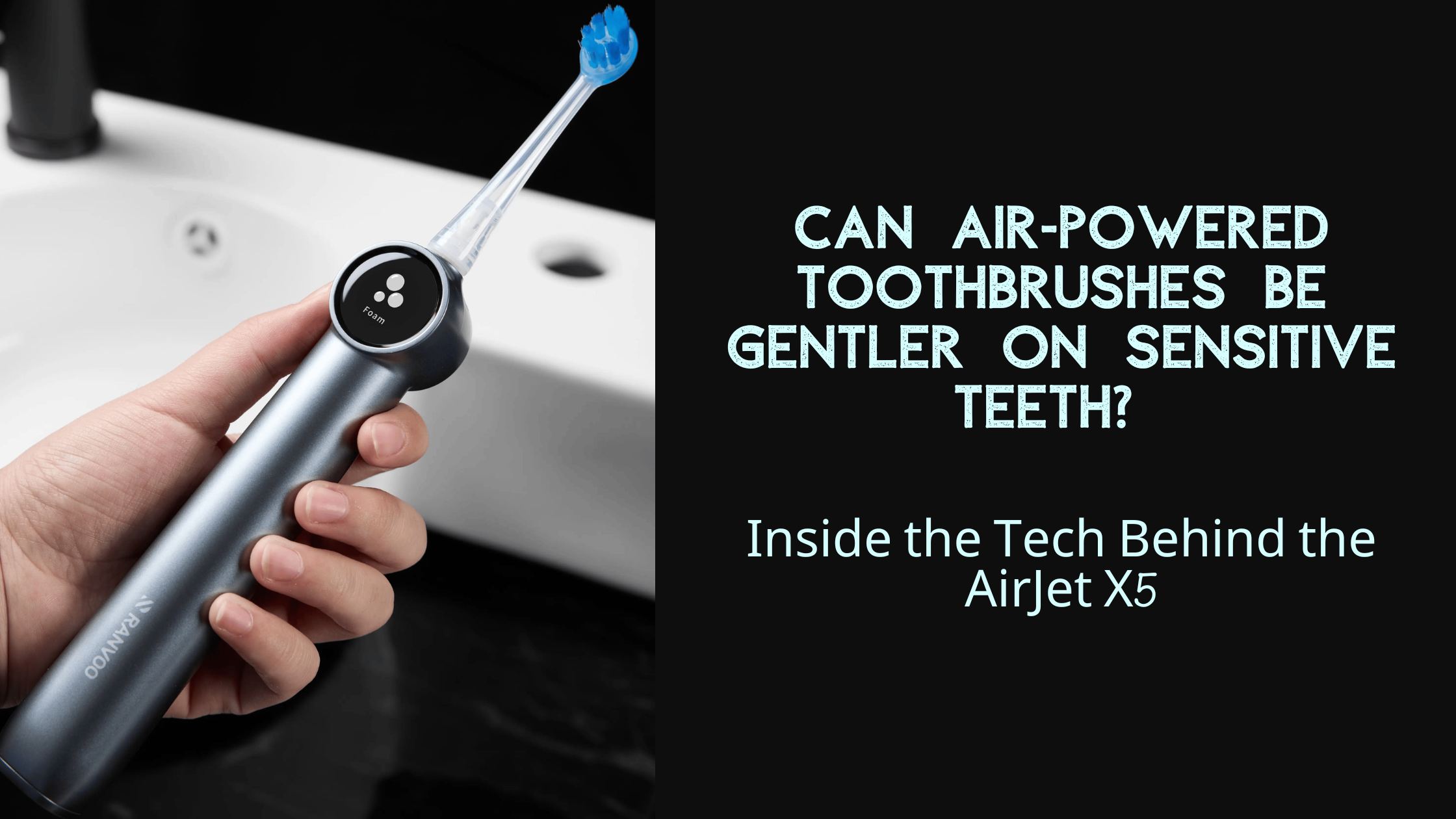
Can Air-Powered Toothbrushes Be Gentler on Sensitive Teeth? Inside the Tech Behind the AirJet™X5
For people with sensitive teeth, brushing can sometimes be an uncomfortable part of an otherwise ordinary routine. Cold water can trigger a sharp twinge, the gumline can feel particularly tender, and even a toothbrush marketed as “gentle” may not always feel that way.
Much of the electric toothbrush market has traditionally focused on movement — sonic vibrations, rotating heads and increasingly high brushing speeds. But what happens when the approach shifts from adding more mechanical action to finding another way to clean?
That is the idea behind the AirJet™ X5, an electric toothbrush from RANVOO that uses air and microscopic bubbles alongside its bristles.
Why Tooth Sensitivity Can Make Brushing Difficult
Tooth sensitivity can occur when the protective layer of the teeth wears down or when receding gums leave parts of the roots exposed. Mechanical force during brushing can add to the discomfort, particularly around already-sensitive areas.
This can make brushing a tricky balance. Applying too much force may hurt, while brushing too cautiously can leave people wondering whether they are cleaning effectively enough.
Electric toothbrushes have long tried to solve the second part of that equation through movement. Sonic and rotating brushes use repeated physical motion to remove plaque, with some models offering tens of thousands of movements per minute.
RANVOO takes a different approach with the AirJet X5.
What Is Different About the AirJet™ X5?
Instead of relying primarily on the bristles to physically scrub the surface of the teeth, the AirJet X5 incorporates what the company calls AirJet™ technology.
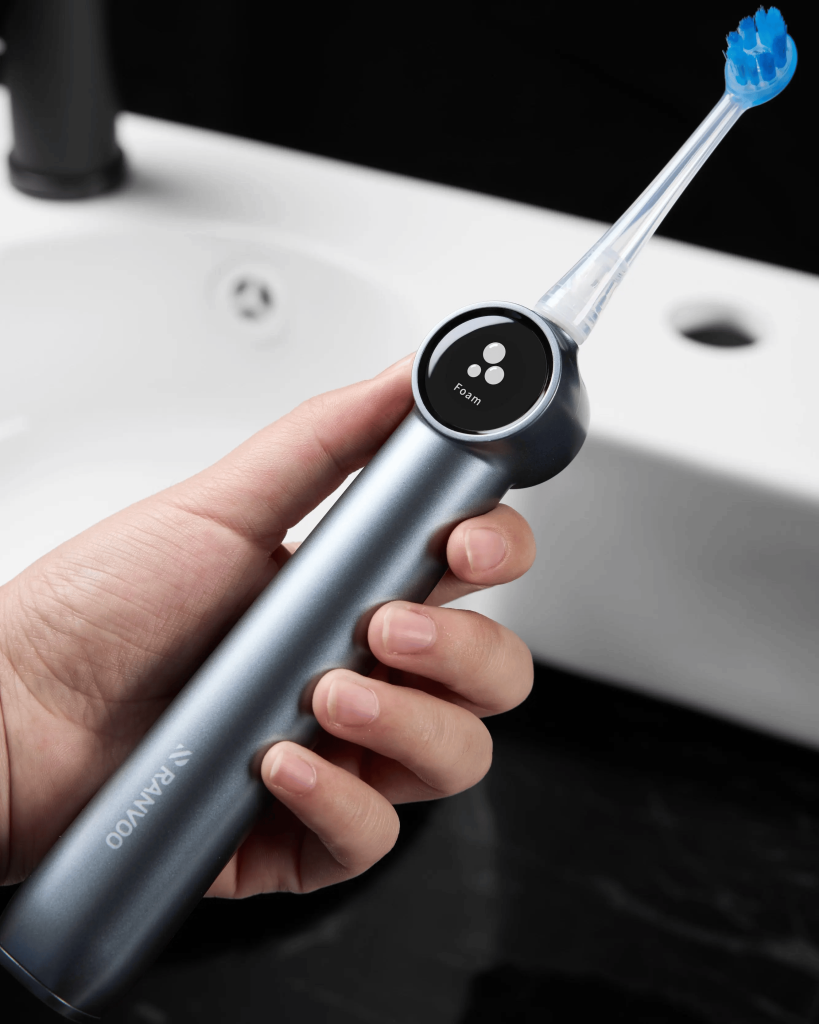
According to RANVOO, a miniature pump inside the toothbrush pressurises air, which then passes through a boost chamber and creates microscopic cavitation bubbles. A brush head designed around the Coandă effect helps direct this airflow and the bubbles towards spaces between the teeth and along the gumline.
As these bubbles collapse, they produce small pulses of energy designed to help lift plaque away.
The bristles remain part of the brushing process, but the idea is that they do not have to do all of the cleaning through physical contact alone.
For someone with sensitive teeth or gums, that distinction could be significant. Instead of attempting to make a conventional high-motion toothbrush feel gentler simply by adding a sensitive mode, the mechanism itself is designed around reducing physical force.
Can Less Force Still Clean Effectively?
Gentleness is useful only if a toothbrush is still able to do its primary job.
RANVOO says its laboratory testing found that the AirJet X5 can achieve 99% plaque removal while using 56% less physical force and causing 90% less gum damage compared with conventional brushes.
These are manufacturer-provided figures and should be understood as such. The company also cites a third-party CVC Level 1 certificate, No. CVC24300012089, valid through February 2029, in support of its cleaning claim.
The broader idea behind the product is interesting: cleaning ability does not necessarily have to come from increasing the amount of physical force applied to the teeth.
For years, electric toothbrush innovation has often been easy to communicate through numbers — more vibrations, more movements or more cleaning modes. Air-powered cleaning changes the conversation slightly by asking whether the mechanism doing the cleaning can evolve instead.
Rethinking What a “Powerful” Toothbrush Feels Like
There is also a behavioural side to sensitive teeth that specifications cannot fully capture.
When brushing repeatedly causes discomfort, people may begin avoiding certain areas, using extremely light pressure or becoming particularly cautious around the gumline. A toothbrush designed to rely less heavily on mechanical scraping is therefore attempting to address both cleaning and the experience of brushing.
The AirJet X5 is designed to feel quieter and less aggressive than brushes built predominantly around high-frequency vibration. Its combination of airflow, bubbles and bristles is meant to deliver cleaning without making force the central feature of the experience.
That does not mean every electric toothbrush works in the same way, or that speed alone determines whether a brush will suit sensitive teeth. It does, however, point towards a different direction for oral-care technology.
A Different Approach to Sensitive-Teeth Care
For consumers with sensitive teeth, buying an electric toothbrush has often meant searching through “gentle” settings, softer brush heads and pressure-control features.
The AirJet X5 approaches the problem earlier in the process. Rather than only controlling how forcefully a conventional mechanism operates, RANVOO has changed part of the mechanism itself.
Whether air-and-bubble technology becomes a larger category within electric toothbrushes remains to be seen. But the AirJet X5 offers an interesting example of how brands are beginning to reconsider a basic assumption about oral care: that a deeper clean necessarily requires more aggressive physical action.
For sensitive teeth, a toothbrush that focuses on how it cleans — rather than simply how fast it moves — could be a welcome shift.