

Why Do We Still Romanticise the Strict Teacher?
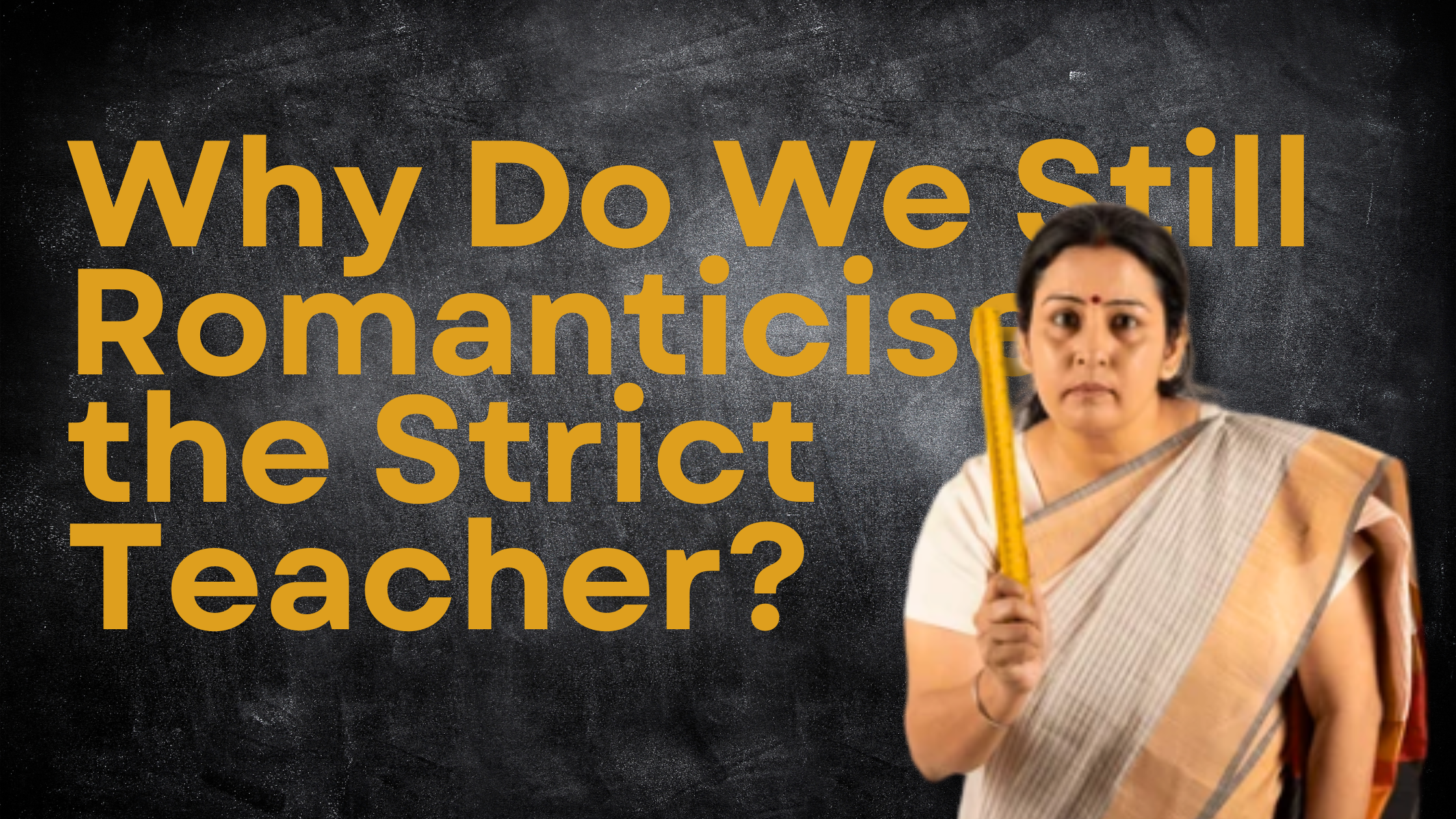
As Indians, many of us can still recall how a strict teacher made us feel. The ruler on the desk. Kneeling outside the classroom. Standing on a bench. Holding a marksheet while being shouted at.
And almost every one of us has heard some version of: Our teachers used to hit us, and we turned out fine.
Some say it almost fondly. Others even wear it as a badge of honour. But it is worth asking: why do we still romanticise the strict teacher?
Six-year-old Pranay Teja recently collapsed and died at his school in Visakhapatnam. Reports say he had been reprimanded and allegedly struck by a teacher over incomplete homework shortly before he collapsed. Police are investigating the circumstances surrounding his death.
Whatever the investigation ultimately establishes, the incident has reopened an uncomfortable conversation around punishment in schools and the way we continue to think about discipline.
Why Do We Confuse Harshness With Caring?
Somewhere along the way, many of us absorbed the idea that a strict teacher was a teacher who cared more. Shouting became “tough love”. Humiliation was explained away as preparation for the real world. Fear itself became evidence that the teacher was doing their job.
Perhaps it also became easier to believe that the discomfort we experienced as children had a purpose.
But looking back, another question emerges: could those same teachers have taught us discipline, responsibility and resilience without making children afraid of them?
Where Does Discipline End and Intimidation Begin?
There is a difference between discipline and intimidation.
Discipline should help a child understand boundaries, consequences and responsibility without taking away their dignity. Intimidation relies on fear.
Ask adults about their school years and many will remember the teacher whose voice made the classroom go silent, the punishment they dreaded or the embarrassment of being singled out in front of everyone. The lesson itself may have disappeared from memory, but the feeling often hasn’t.
That tells us something about how deeply fear can settle into a child’s experience of school.
It Was Never Only About the Stick
When we think about strict teachers, physical punishment is usually the first thing that comes to mind. But harshness in a classroom does not always leave a visible mark.
There is the shouting that makes a child afraid to answer a question. The joke made at the expense of a struggling student. The public comparison: Why can’t you be more like them? The humiliation of being singled out in front of classmates.
These experiences can easily be dismissed as ordinary school discipline, particularly by adults who experienced the same things themselves.
And perhaps that is partly why so many uncomfortable school memories eventually get retold as funny stories. Distance makes them easier to laugh about.
But Didn’t It “Build Character”?
People who say strict teachers made them stronger are not necessarily defending cruelty. They may genuinely believe those teachers helped make them punctual, disciplined or hardworking.
But it is difficult to know whether fear produced those qualities or whether we developed them alongside, or despite the fear.
“We turned out fine” may describe one person’s experience. It cannot become the standard by which we decide what another generation of children should be expected to tolerate.
Children should not have to be frightened in order to learn responsibility.
What Does Better Actually Look Like?
Children need structure, boundaries and consistency. Teachers also have the enormously difficult job of managing classrooms, completing curricula and responding to children with very different needs.
None of that requires humiliation or physical punishment.
There are a few things parents, teachers and other adults can reconsider:
- Start separating respect from fear. A child being scared of an adult is not the same as respecting them.
- Stop using “we turned out fine” to dismiss experiences that children say are hurting or frightening them.
- Remember that Section 17 of India’s Right to Education Act prohibits physical punishment and mental harassment of children.
- Listen when a child repeatedly says a teacher frightens them rather than immediately dismissing it as an attempt to avoid discipline.
We may romanticise the strict teacher partly because it helps us make sense of our own childhoods. What happened to us was normal, we tell ourselves, because everybody experienced it.
But Pranay Teja went to school one morning and never came home.
As the circumstances of his death continue to be investigated, perhaps the larger conversation should not be about whether fear can make children obey. It should be about why fear was ever considered necessary for teaching them in the first place.