

The Last of Earth by Deepa Anappara: Mapping Tibet, Memory and Unnamed Bonds
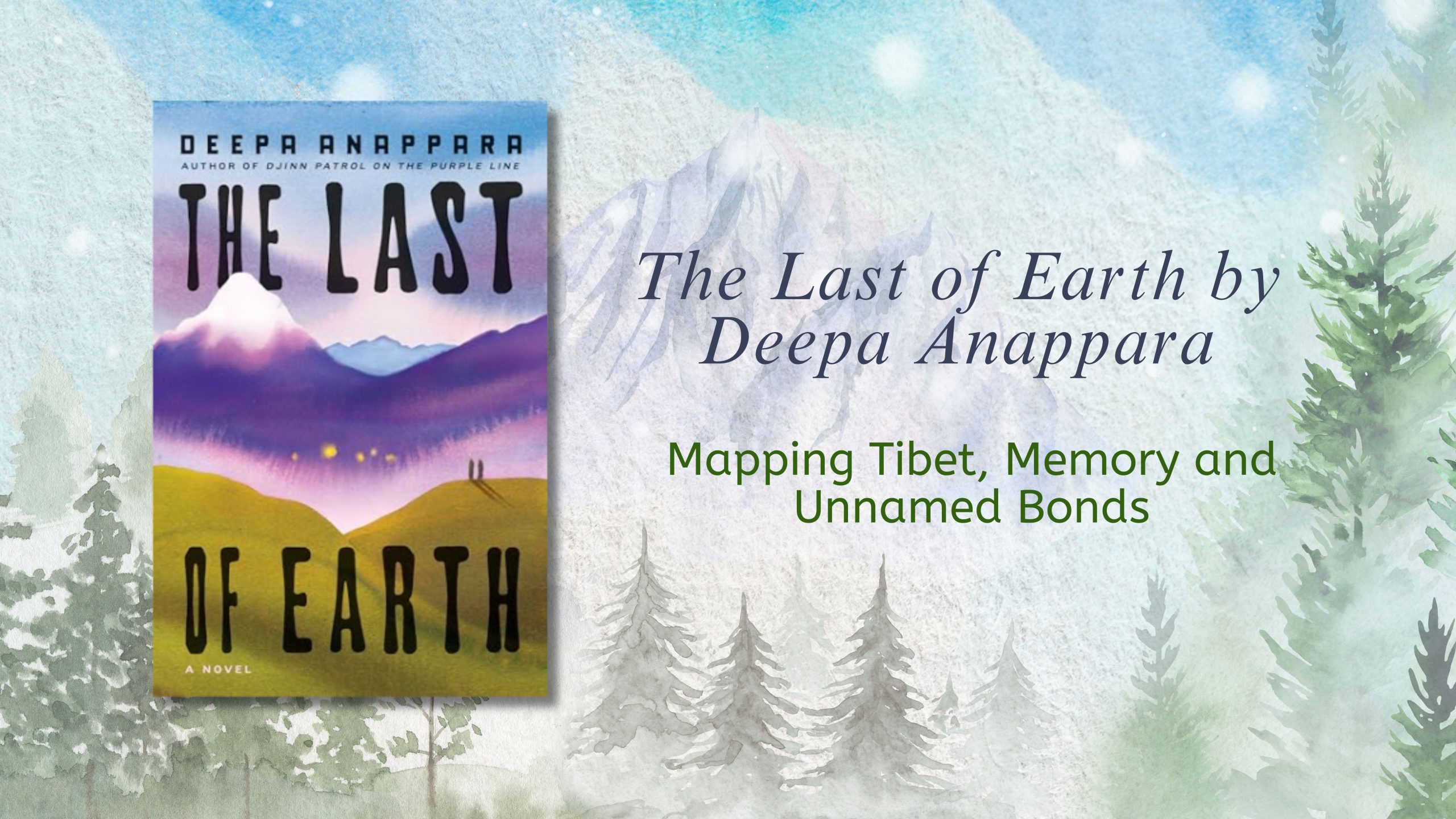
Some novels recreate history, and some interrogate the very act of recording it. In The Last of Earth, Deepa Anappara ventures into the snow-laden silences of nineteenth-century Tibet to examine not merely colonial exploration, but the fragile human desires buried beneath imperial ambition. Set against the backdrop of British incursions into the ‘Forbidden Kingdom’, the novel becomes less an adventure story and more an excavation of longing, grief, memory, and the intimate voices we continue to carry across borders and landscapes.
The Empire and Its Shadows
At its surface, the novel traces the journeys of explorers and surveyors moving through Tibet in the last part of the Nineteenth century. Britain, frustrated by Tibet’s resistance to European entry, trained Indian surveyors to traverse terrains forbidden to white explorers. Balram, an Indian schoolteacher and a surveyor-spy, becomes one such intermediary figure, useful to empire, yet never fully seen by it. Alongside him travels an English captain obsessed with mapping rivers and immortalising his name through geography. Elsewhere, Katherine, denied recognition by the male-dominated institutions of Europe, attempts her own perilous journey into Lhasa.
But Anappara refuses the seduction of heroic exploration narratives. Her novel dismantles the romance of cartography by exposing its violence. Maps here are instruments of possession, and exploration becomes another language of extraction. The empire wishes to name rivers, mountains, borders, as though naming were ownership itself.
Yet beneath this political critique lies something more haunting: the recognition that history remembers power while erasing those who carried it on their backs. The unnamed guides, translators, surveyors, labourers carry all the burden but remain unnamed and unrecognised.
The Inner Worlds We Carry
What makes The Last of Earth remarkable is not merely its historical intelligence but its extraordinary emotional sensitivity.
Anappara writes with profound attentiveness to interiority, to the private griefs and unspoken affections that survive even amid violence. Her characters are constantly accompanied by voices from elsewhere: memories of friends, echoes of family, unfinished conversations, the dead who continue speaking within the living.
Balram’s journey is shadowed by friendship and loyalty, by the memory of Gyan and by the ache of those left behind. Katherine’s ambition, too, emerges not from vanity alone but from loneliness, exclusion, and a desperate need to leave some trace of herself upon the world. These emotional undercurrents prevent the novel from becoming a simple anti-colonial critique. Instead, it evolves into a meditation on what remains human even within systems built on domination.
Tibet as Silence, Mystery, and Resistance
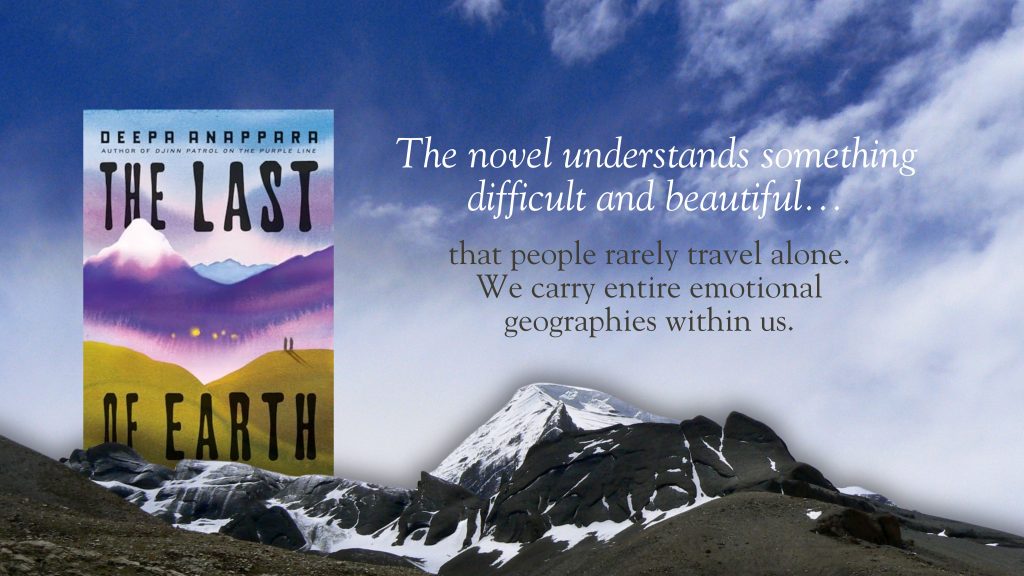
Anappara’s Tibet is rendered with astonishing restraint. She avoids exoticising the landscape, choosing instead to portray it as elusive and alive, a geography resistant to possession. Rivers shift. Paths disappear. Snowstorms erase certainty. The land itself seems to reject the arrogance of empire.
This is where the novel acquires an almost philosophical dimension. The farther the characters move into the mountains, the more fragile human ambition appears. Maps disintegrate against weather. Certainties collapse under altitude. What survives are not the imperial records but fleeting moments of companionship, tenderness, and moral reckoning.
The natural world in the novel repeatedly unsettles the illusion that history can ever be fully contained on paper.
A Novel About Legacy
Nearly every character in the novel is concerned with legacy. The captain wants geographical immortality. Katherine wants historical recognition. Empire wants territorial permanence. Yet Anappara quietly questions whether legacy is ever found in conquest at all.
Instead, the novel proposes another form of endurance: the traces we leave in one another. Friendship. Love. Shared suffering. The unlikely bonds forged in hostile landscapes.
This is ultimately what lingers after the final page, not the routes charted across Tibet, but the emotional cartographies etched between people.